
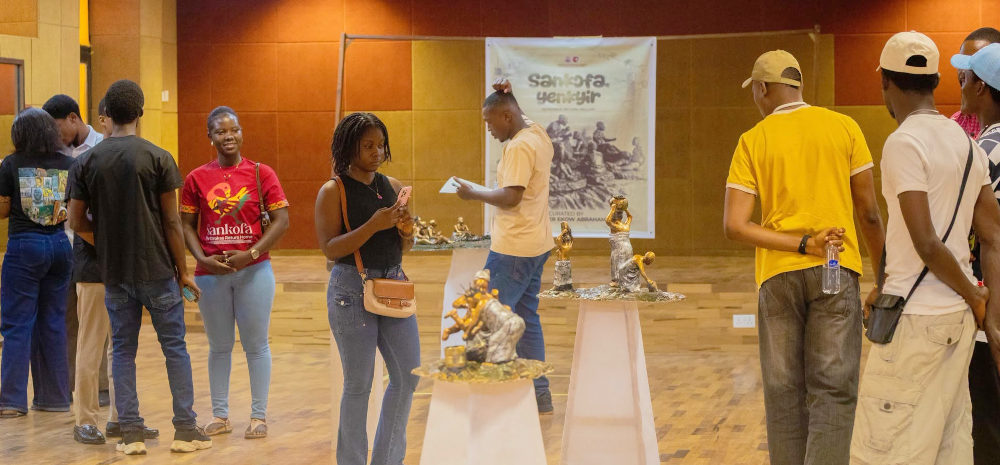
SANKOFA YENKYIR: SCULPTING MEMORY, COMMUNITY, AND CULTURAL CONTINUITY - Curatorial Reflection and Exhibition Report
Ebenezer Kow Abraham (Department of Art Education, University of Education, Winneba - Ghana)
“Se wo werɛfir na sankɔfa a yenkyir."
(It is not wrong to go back for that which has been forgotten.)
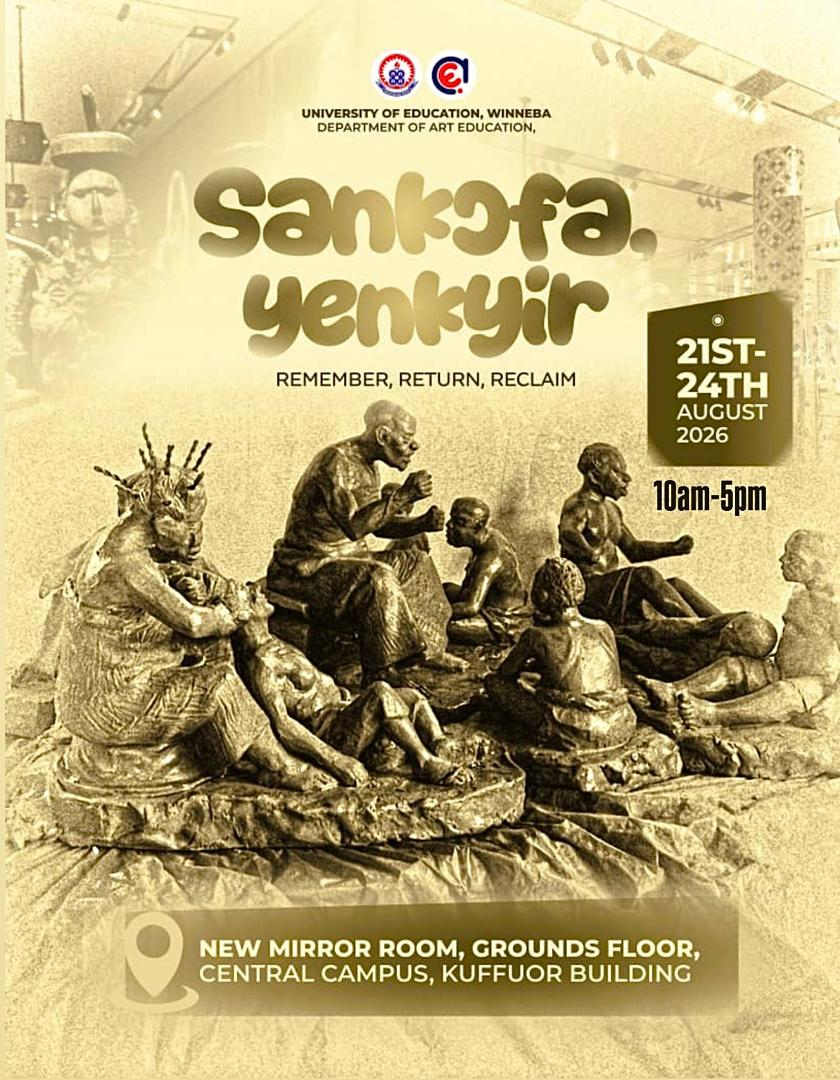
This Akan proverb formed the conceptual foundation of Sankofa, Yenkyir, an exhibition exploring the intersections of memory, heritage, identity, and contemporary sculptural practice. Conceived as both an artistic and cultural intervention, the exhibition sought to challenge audiences to reconsider the value of everyday histories and communal experiences that are increasingly disappearing from public consciousness. As Ghanaian philosopher Kwame Gyekye (1997) argues, indigenous philosophical traditions do not view heritage as a static relic but as a dynamic tool for contemporary self-definition and social orientation. Grounded in this perspective, Abraham (2026) articulates how the Sankofa philosophy can be operationalised through a practice-led methodology, specifically the pedagogical framework of Return, Retrieve, and Rise, to bridge traditional analogue craft, cultural memory, and contemporary artistic practice. Through sculpture, found objects, and figurative narratives, the participating artists engaged in cultural retrieval, transforming fragments of collective memory into tangible forms that invited reflection, dialogue, and renewed appreciation.
More than an exhibition of objects, Sankofa Yenkyir functioned as a space of remembrance. The works asked important questions: What do we lose when we forget the practices that shaped our communities? What forms of knowledge disappear when traditional ways of life are abandoned? How can contemporary art contribute to preserving cultural memory in a rapidly changing society? The exhibition responded to these questions through sculptures that revisited scenes from everyday Ghanaian life: childhood play, communal labour, storytelling traditions, caregiving, resourcefulness, and intergenerational learning. By elevating these ordinary experiences into artistic subjects, the exhibition argued that culture resides not only in monuments and historical narratives but also in the seemingly mundane practices through which communities define themselves (Amenuke et al., 1991; Mensah & Abraham, 2023; Wiredu, 1996).
Curatorial Intent: Returning as a Form of Resistance
At its core, Sankofa Yenkyir was not about nostalgia. Rather, it was about cultural consciousness and critical retrieval. The exhibition challenged the assumption that progress requires abandoning traditional knowledge and values. Instead, it proposed that meaningful development must remain connected to historical experience, studio practice, and collective wisdom (Abraham, 2026; Wiredu, 1996). The sculptures therefore operated simultaneously as works of art and as cultural archives. They preserved visual memories of practices that many visitors immediately recognised, but that many increasingly encounter only through recollection. As Essel (2019) notes regarding contemporary Ghanaian studio practices, artistic creation serves as a decolonial resistance against the erosion of localised memory. In public memory spaces, visual art acts as a didactic and therapeutic instantiation of community solidarity (Mensah & Abraham, 2023). The exhibition transformed memory into material form, making the invisible visible and allowing audiences to confront their relationship with the past.
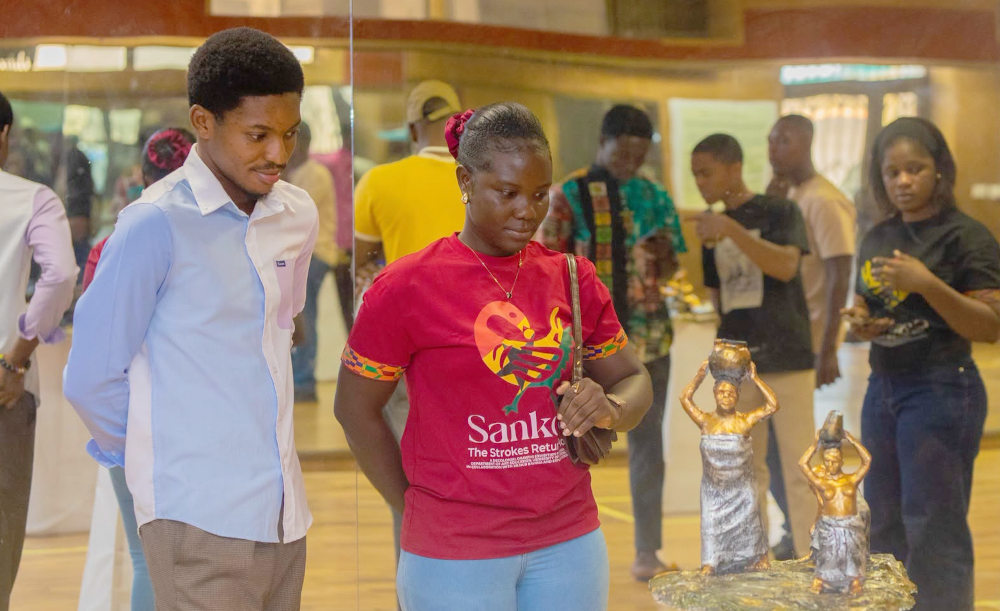
Photo: UEW Media Team
One of the most notable outcomes of the exhibition was the extent to which audiences recognised themselves within the works. Rather than functioning as distant observers, visitors became participants whose own memories completed the narratives suggested by the sculptures. Anthony Nyame (Heritage '57) captured this relationship when he wrote: “I am really surprised and inspired about the whole exhibition. When I heard Sankofa, I asked what I was going to see. All the activities here really reflect who I was back in the day. Sankofa symbol tells a lot. I stand to say it is always good to learn from the past.” This response affirmed the exhibition's fundamental objective: to create a space where personal memory and cultural history converge.
Sculpture as Storytelling
One of the most significant curatorial observations from the exhibition relates to the enduring power of sculpture as a storytelling medium. Contemporary art discussions often privilege digital technologies and new media; however, the responses gathered during Sankofa Yenkyir demonstrated that sculpture remains uniquely capable of communicating deeply human experiences (Fosu, 1993). The artists employed figurative representation not merely for aesthetic purposes but as a narrative strategy. Bodies became carriers of memory; gestures evoked labour, caregiving, resilience, and communal life. Material choices reinforced the exhibition's thematic concerns by linking artistic production to the resourcefulness embedded in Ghanaian cultural practices, where found and traditional media carry their own socio-cultural histories (Essel & Acquah, 2016; Mensah & Abraham, 2023).
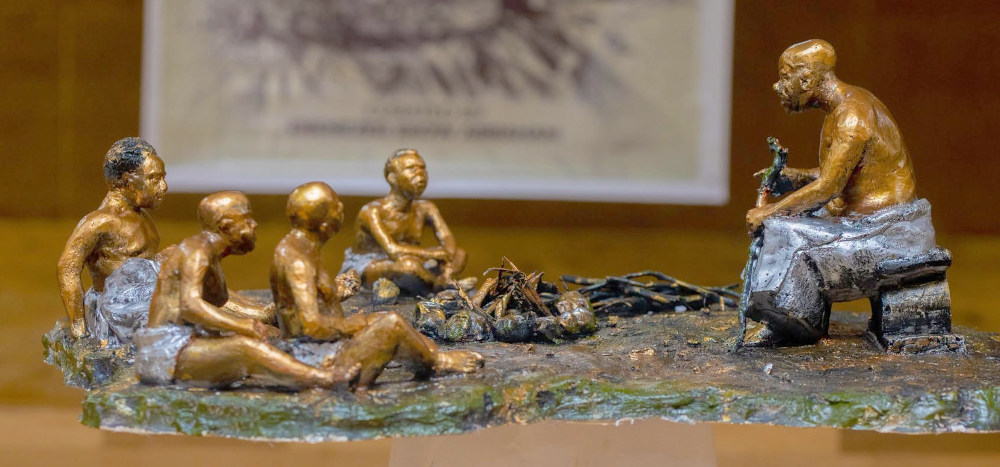
Photo: Ebenezer Nii Saki Sackey
This narrative power was recognised by visitors, including Dr. Nyamewero Navei, who observed: “I did not know anything about sculpture pieces until I came for the exhibition, and I must say I'm impressed by how the artists were able to depict figures to bring out the stories from our past.” As a curator, I found this comment particularly significant because it highlighted the exhibition's accessibility. It demonstrated that the works communicated effectively beyond disciplinary boundaries, allowing audiences unfamiliar with sculptural practice to engage meaningfully with the ideas presented.
Nostalgia, Memory, and Emotional Geography
Throughout the exhibition, a recurring theme emerged in visitor responses: nostalgia. Many viewers described experiencing what might be termed an "emotional geography" of memory, where the sculptures transported them to moments, places, and experiences that had long receded into the background of everyday life (deGraft-Yankson, 2021).
Saviour Ahiakpor reflected: “This is a masterpiece, a flashback of my childhood. It gave me a nostalgic feeling.” Similarly, Cecilia G. Samba wrote: “The sculpture works are magnificent. It has really sent me back when they told us stories and when our parents would wake us up at dawn to fetch water and so on.” These comments reveal an important achievement of the exhibition. The artworks did not merely represent the past; they activated lived memories. In doing so, they transformed the gallery from a site of observation into a participatory site of recollection and communal dialogue (deGraft-Yankson, 2021).
Cultural Memory and the Politics of Preservation
A central insight emerging from Sankofa Yenkyir concerns the urgency of preserving intangible cultural heritage. Many visitors noted that the sculptures depict practices that are increasingly absent from contemporary life. This realisation transformed the exhibition into a conversation about cultural sustainability and artists' responsibility to document changing realities (Amenuke et al., 1991; Essel, 2019; Mensah & Abraham, 2023).
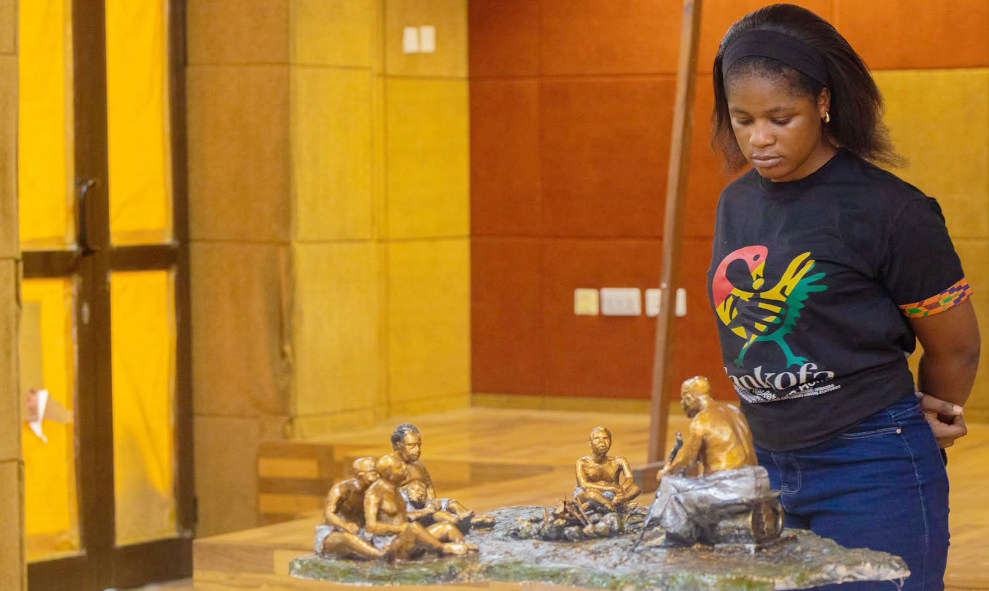
Photo: UEW Media Team
Dr Veronica Agyeiwah articulated this clearly: “Walking through this exhibition brought memories of things we no longer or hardly see in our communities today. It deeply resonates with the theme ‘Sankofa Yenkyire’.” Her observation points to one of the exhibition's most important contributions. The artworks function as visual records of social practices that risk disappearing from collective consciousness. Through artistic interpretation, these memories are preserved and offered to future generations as essential components of cultural identity.
Artistic Research as Cultural Inquiry
The exhibition also demonstrated the value of studio-based artistic research within the university context. Rather than producing objects in isolation, the artists engaged in a rigorous process of investigating community histories, cultural symbols, and everyday experiences (Acquah, 2014; Essel & Acquah, 2016).
Artist Demi recognised this dimension when writing: “The theme ‘Sankofa Yenkyir’ is a theme I have been researching. So seeing my fellow artists creating such amazing sculpture pieces about the community and what we did as children is incredible.” This response highlights the exhibition's role in ongoing scholarly and artistic conversations about memory, identity, and heritage. As Abraham (2026) demonstrates, practice-led studio research provides an operational framework where creative exploration and critical inquiry intersect to generate new knowledge grounded in local heritage.
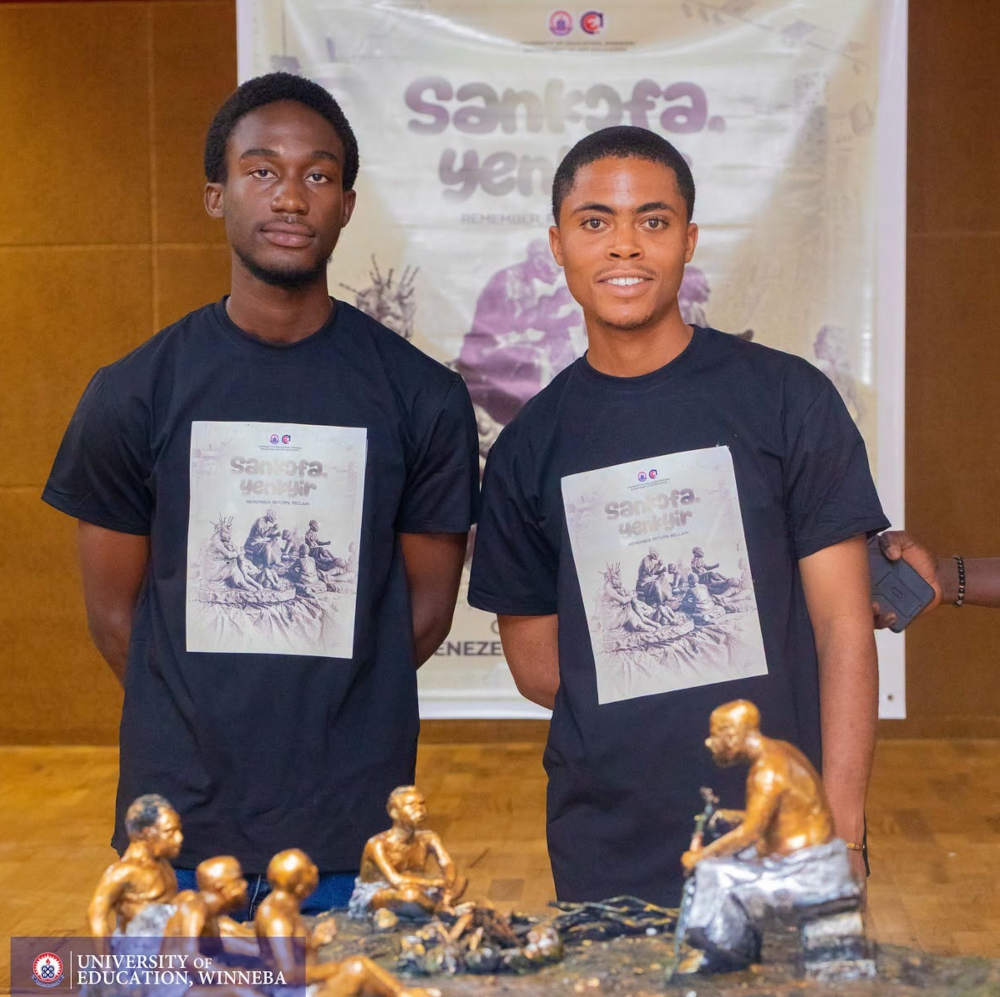
The two artists: Ekow Tandoh and Ivan Howard (Photo: UEW Media Team)
Audience Engagement and Critical Dialogue
An effective exhibition does not simply generate admiration; it generates discussion. While comments were overwhelmingly positive, visitors also contributed thoughtful critiques concerning anatomy, material choices, and representation. Suggestions regarding the depiction of women and children, the use of found objects, and sculptural proportions indicate a highly engaged audience willing to enter into dialogue with the works.
Such feedback is an important indicator of success. It demonstrates that visitors did not passively consume the exhibition but actively negotiated meaning with the artworks. The gallery space became a participatory arena where interpretation was collectively constructed (deGraft-Yankson, 2021).
Recognition of Excellence
Perhaps the most enthusiastic response came from a visitor who wrote: “Sankofa indeed! I cannot believe these exceptional pieces were done by Ghanaian students. These are amazing, fascinating, wonderful and exceptional. These should be seen at all international museums across the world.” While ambitious in scope, this statement nevertheless reflects the quality of work presented and the impact the exhibition had on audiences. It speaks to the growing strength of contemporary sculptural practice within the university and the potential of emerging Ghanaian artists to contribute meaningfully to national and international conversations (Fosu, 1993).
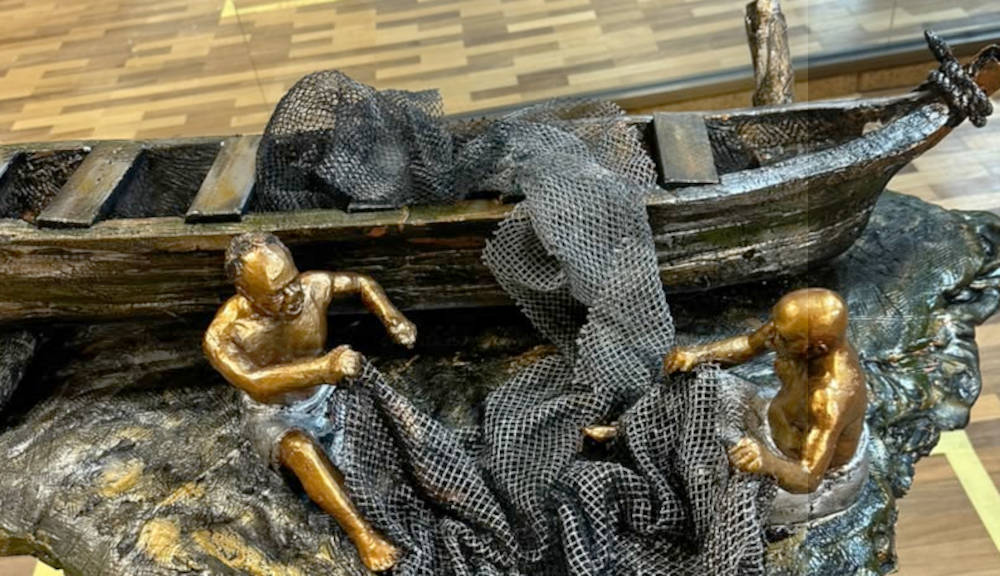
Photo: Ebenezer Nii Saki Sackey
Sankofa Yenkyir and the Global Imperative of Cultural Education
While Sankofa Yenkyir was grounded in Ghanaian experiences, its implications extend far beyond the local context. Across the world, art educators, researchers, and cultural institutions are increasingly concerned with questions of identity, belonging, heritage preservation, and the place of indigenous knowledge within educational systems (deGraft-Yankson, 2018). In this regard, the exhibition contributes to a growing international conversation about the role of visual culture in sustaining community memory and challenging dominant narratives of history and progress.
The exhibition demonstrates that art education is not merely concerned with the acquisition of technical skills. Rather, it is a process of cultural inquiry through which students investigate, interpret, and communicate lived experiences (Acquah, 2014; Essel, 2019). The sculptural works presented in Sankofa Yenkyir reveal how studio practice can function as a research methodology, enabling emerging artists to engage critically with social history, material culture, and collective memory. The exhibition therefore serves as a powerful example of practice-led research in action, where artistic production becomes a legitimate means of generating knowledge (Abraham, 2026).
Within global discussions on decolonising education, Sankofa Yenkyir offers an important model. Instead of importing conceptual frameworks from elsewhere, the exhibition begins with indigenous philosophy as both method and subject (deGraft-Yankson, 2018; Wiredu, 1996). The concept of Sankofa is not merely a symbolic motif; rather, it serves as a framework for critical reflection, cultural recovery, and knowledge production (Abraham, 2026). In this sense, the exhibition contributes to ongoing efforts to re-centre African intellectual traditions within contemporary educational and artistic discourse.
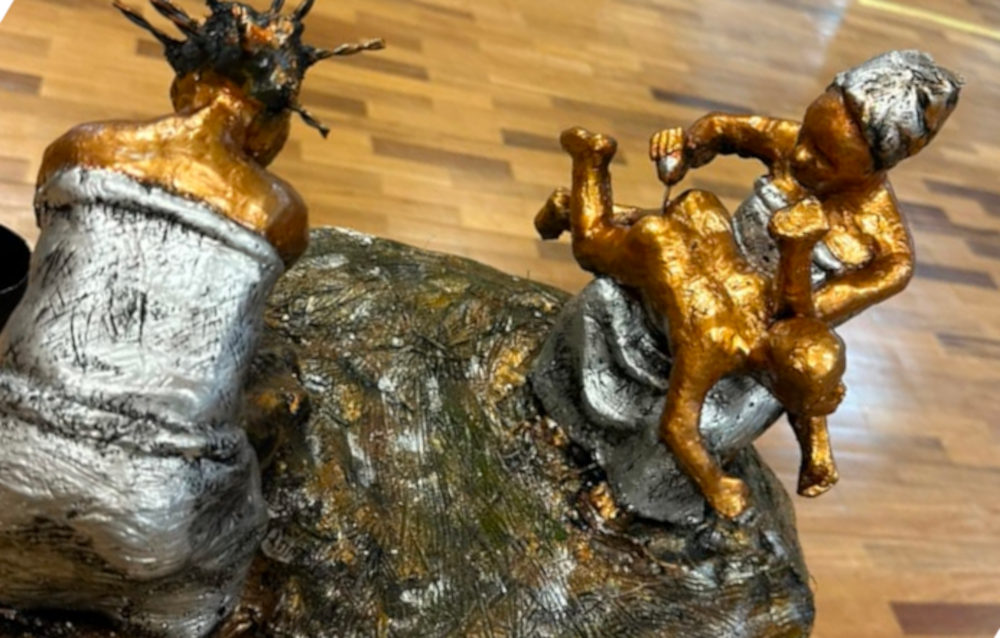
Photo: Ebenezer Nii Saki Sackey
The works also challenge conventional distinctions between heritage and contemporary art. While rooted in memories of communal life, storytelling, labour, caregiving, and childhood experiences, the sculptures are not nostalgic recreations of the past. They are critical reinterpretations that invite audiences to consider how historical experiences continue to shape contemporary identities. By doing so, the exhibition demonstrates the capacity of contemporary African sculpture to participate in global conversations while remaining grounded in local realities (Mensah & Abraham, 2023).
This broader significance was captured in the remarks of Prof. Patrique deGraft-Yankson, Director of the Centre for Research, Culture and Creative Arts (CeRCCA) and Deputy Chair of the Exploring Visual Cultures Network. Reflecting on the exhibition theme, he emphasised the importance of moving beyond symbolic appreciation of heritage toward active cultural recovery: “I am excited because of the theme that was selected for the exhibition. You know, Sankofa has achieved international recognition. That Sankofa aside, its addition of Yenkyir tells us something important.” For Prof. deGraft-Yankson, the significance of the theme lies in its challenge to cultural complacency. He observed that while conversations about heritage are increasingly common, genuine commitment to cultural retrieval remains limited: “It is asking us, if returning to fetch what is vital is not a taboo, are we ready to go back for things forgotten in the past?” He further cautioned against the tendency to undervalue local cultural resources at a moment when global audiences are showing renewed interest in African knowledge systems: “We speak about these themes, but the readiness and willingness to look back, retrieve and move forward is missing.” And perhaps most importantly: “The world is evolving, and people outside Africa are getting so much interest in what we used to have in the past whilst we ourselves look down upon our culture.”
These observations resonate deeply with contemporary debates within visual culture studies, museum practice, and art education internationally (deGraft-Yankson, 2018; Essel, 2019). They remind us that cultural preservation is not simply an act of documentation but a process of active engagement that requires communities to recognise the intellectual, aesthetic, and social value of their own traditions. Through this lens, Sankofa, Yenkyir can be understood not only as an exhibition of student sculpture but as a pedagogical intervention. It demonstrates how art education can foster cultural literacy, critical citizenship, and historical consciousness. It also highlights the importance of exhibitions as sites of public scholarship where creative practice, research, and community engagement intersect.
For the Exploring Visual Cultures Network, the exhibition offers a compelling example of how local artistic practices can contribute to international discussions about memory, identity, heritage, and cultural futures. It reminds us that visual culture is not simply about seeing; it is about remembering, interpreting, questioning, and ultimately reimagining the worlds we inhabit.
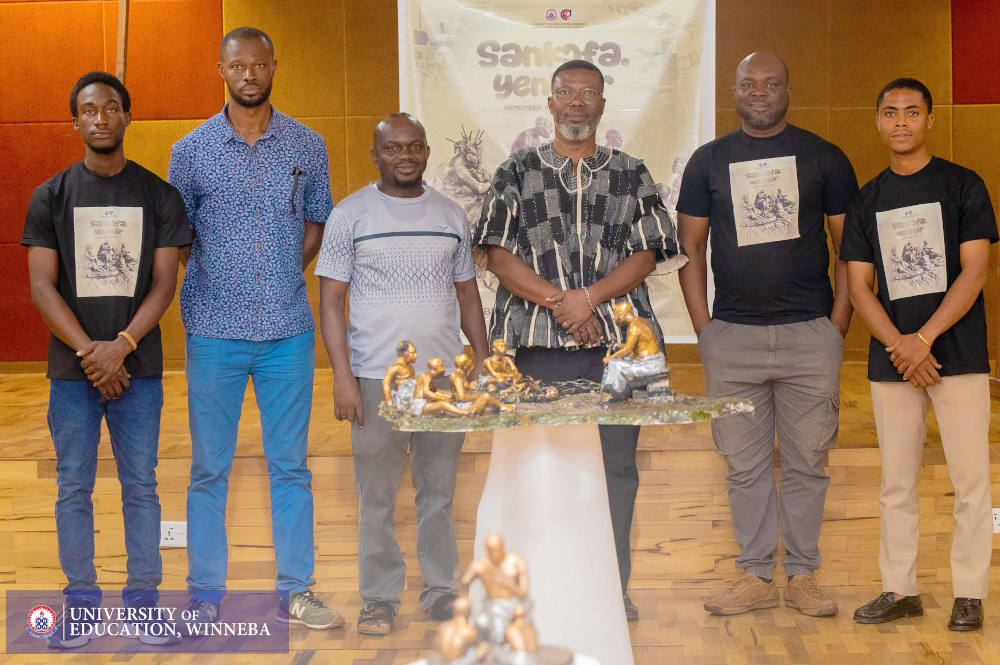
Faculty with artists (photo: courtesy of UEW Media)
Conclusion: Beyond the Exhibition
Looking back, Sankofa, Yenkyir achieved more than its immediate curatorial goals. It became a platform through which memory was activated, culture was celebrated, and dialogue was encouraged. The exhibition revealed how art can serve simultaneously as research, preservation, education, and community engagement. Most importantly, it demonstrated that the philosophy of Sankofa remains profoundly relevant. At a time when societies are increasingly shaped by rapid change and global influences, the exhibition reminded audiences that there is wisdom in looking back (Abraham, 2026; Gyekye, 1997; Wiredu, 1996). Not as an act of retreat, but as a means of moving forward with greater awareness of who we are and where we come from.
The voices recorded throughout the exhibition testify to its success. Visitors left not only having seen sculptures but having encountered their own histories, remembered forgotten experiences, and reflected on the cultural values that continue to shape collective life. In this regard, Sankofa Yenkyir was not simply an exhibition. It was an act of cultural remembrance, a scholarly inquiry into heritage, and a powerful affirmation that the stories of our communities remain worthy of preservation, interpretation, and celebration for generations to come.
-------------------------------------------------------------------------------
REFERENCES
- Abraham, E. K. (2026). RETURN, RETRIEVE, RISE: Bridging analogue craft and WebAR through the Sankofa philosophy. Exploring Visual Cultures. https://www.explore-vc.org/en/news/july-21.html
- Acquah, E. (2014). Studio-based practice and indigenous material culture in Ghanaian art institutions. Ghana Journal of Indigenous Knowledge Systems, 3(1), 45–58.
- Amenuke, S. K., Dogbe, B. K., Asare, F. D. K., Ayiku, R. K., & Baffoe, A. (1991). General knowledge in art for Senior Secondary Schools. Ministry of Education, Ghana; Evans Brothers Ltd.
- deGraft-Yankson, P. (2018). Visual culture and art education in contemporary Ghana: Navigating local traditions and global trends. Journal of Cultural Research in Art Education, 35(2), 112–129.
- deGraft-Yankson, P. (2021). Conceptualizing public art and community engagement in tertiary art education. International Journal of African Higher Education, 8(1), 77–94.
- Essel, O. Q. (2019). Decolonizing the visual arts curriculum in Ghana: Historical imperatives and contemporary praxis. Arts and Humanities in Higher Education, 18(4), 380–396.
- Essel, O. Q., & Acquah, E. (2016). Conceptual art in Ghana: History, praxis and pedagogy. International Journal of Art & Design Education, 35(1), 60–73.
- Fosu, K. (1993). 20th century art of Africa. Artists Alliance for Africa.
- Gyekye, K. (1997). Tradition and modernity: Philosophical reflections on the African experience. Oxford University Press.
- Mensah, T. K., & Abraham, E. K. (2023). Aesthetical discourse on 'Unity Monument' and its role in peace-building in Simpa, Ghana. Journal of African Arts & Culture, 6(1). https://jaac-sca.org/aesthetical-discourse-on-unity-monument-and-its-role-in-peace-building-in-simpa-ghana/
- Wiredu, K. (1996). Cultural universals and particulars: An African perspective. Indiana University Press.