
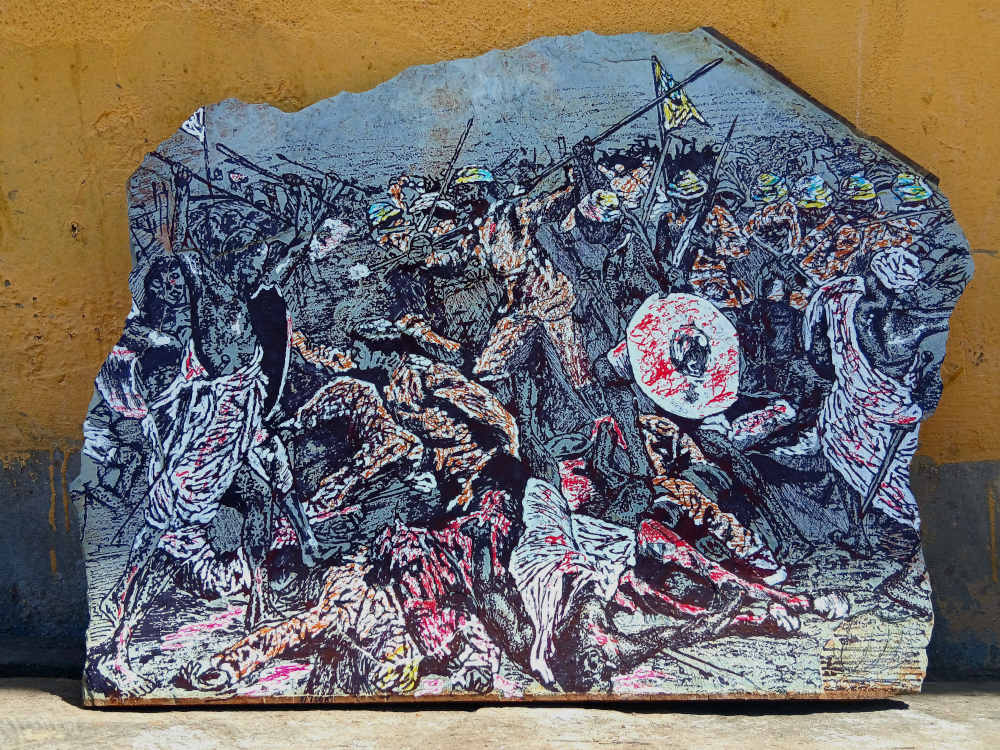
Ekow Tandoh. The Last Witness. 2026. Sedimentary stone slabs, permanent makers, and correction fluids.
My drawings are meditations on memory, silence, and endurance. I work from the belief that landscapes are not passive; they absorb, remember, and reflect the histories etched into them. The rock at the centre of this piece is not merely a geological formation; it is a witness, a storyteller. It has stood unmoved while countless generations of Ghanaian people were uprooted, exiled, and silenced by colonial masters and fellow natives who betrayed us for greed and pleasure. Now, I help it speak, not with words, but through the weight of time, the scars of history, and the language of drawing.
Through the drawn scenery of slavery, I use the glossy lines of permanent markers to represent an indelible, modern mark on an ancient surface, and correction fluid, a tool meant to erase or amend mistakes, becomes a poignant, ironic symbol for histories that cannot truly be covered up or whitened out. I aim to confront the viewer with the brutal truths that textbooks and storybooks often sanitise. The rock becomes a canvas of resistance, a monument to lives lost and voices suppressed. These materials awaken the stories embedded in each stone, not ephemeral by nature, but disciplined by remembrance, structured to hold fragments of a collective trauma that still reverberates.
This piece invites reflection: What does it mean to witness? What does it mean to remember when no one else will? In a world eager to move on, The Last Witness stands firm, demanding that we look back before we move forward.
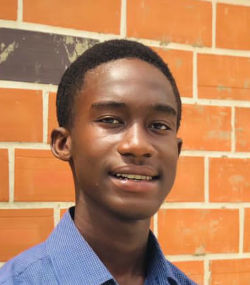
Ekow Tandoh is a Ghanaian artist and final-year Art Education student at the University of Education, Winneba. His practice engages deeply with history, memory, and materiality, using stones as timeless witnesses to human civilisation. In The Last Witness, Ekow transforms stone slabs into visual narratives of the Gold Coast slavery era. Through the drawn scenery of slavery, he uses the glossy, permanent lines of markers to represent an indelible, modern mark on an ancient surface, while correction fluid, traditionally a tool to erase or amend mistakes, becomes a poignant, ironic symbol for history that can never truly be covered up or whitened out.
Whilst the slave master sought to implement permanent falsehood into our history, his drawings attempt to correct these narratives by revealing the truth concealed by the colonisers. In a world eager to move on, THE LAST WITNESS stands firm, demanding that we look back before we move forward.