
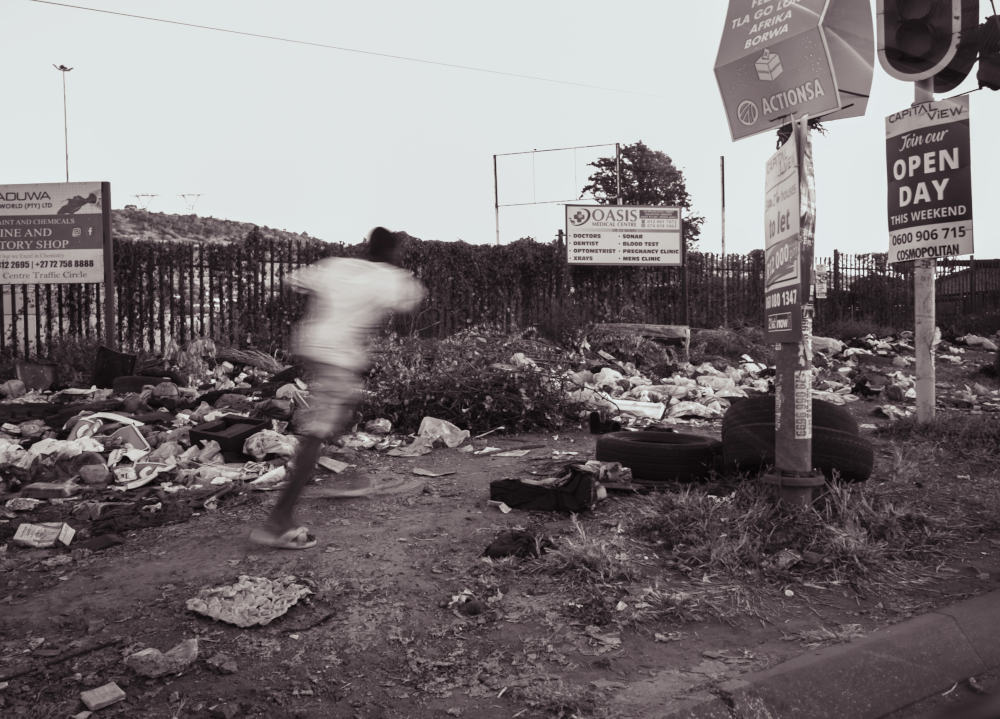
This photograph documents the entrance to Atteridgeville (also known as Pheli), a township in South Africa that I have known as once cared for, structured, and dignified. Today, that same threshold reflects visible deterioration (piles of waste, discarded tires, unmanaged land) marking not only environmental neglect but the shifting economic condition of the country itself.
The entrance of a place is symbolic. It forms first impressions; it announces value. Here, however, the gateway into Atteridgeville is layered with contradiction. Commercial signage promises development, medical care, and investment opportunities, while the ground beneath these promises accumulates debris. The image captures this dissonance: aspiration suspended above abandonment.
The blurred running figure moves through this space in urgency. His motion speaks to survival within instability, the body navigating a landscape shaped by economic strain, unemployment, and systemic neglect. South Africa’s broader economic pressures are not abstract statistics; they manifest spatially, materially, and visibly in townships like this one. Infrastructure weakens, waste accumulates, and maintenance becomes inconsistent. What was once tended begins to fray. By focusing on this entrance, I reflect on how national economic decline reshapes local environments and communal identity. The deterioration of public space mirrors a deeper erosion of resources, of care, of equitable development. Yet the moving body suggests persistence. Even within decay, life continues to move forward.
Within the context of global polycrisis, this work situates South Africa’s economic reality within a broader conversation about inequality, environmental burden, and uneven progress. The photograph asks what it means for a community’s threshold to bear the visible weight of these pressures, and how such spaces become quiet indicators of a nation’s condition. Through this image, I invite viewers to reconsider the politics of visibility: what we overlook at the margins often reveals the most about the centre.
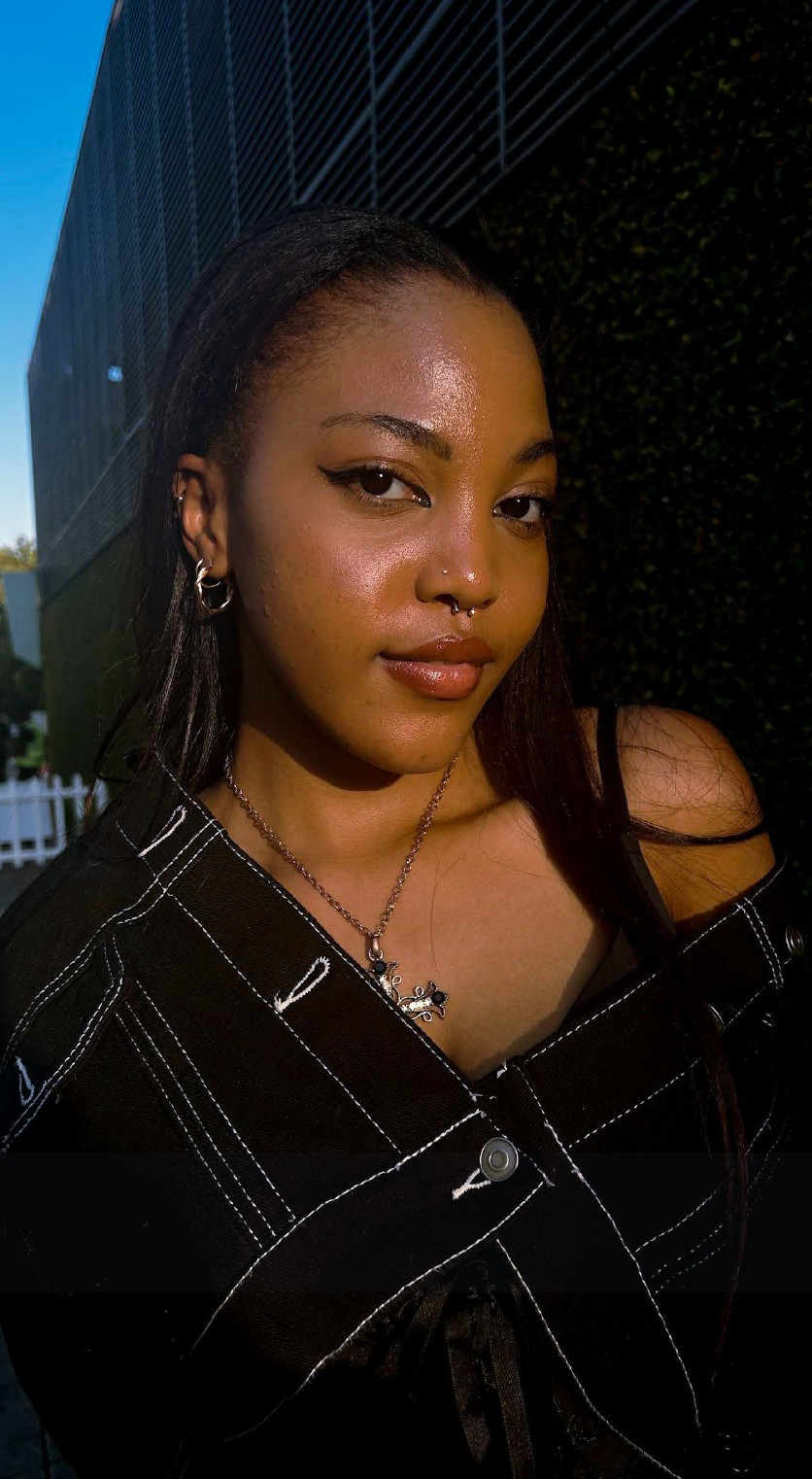
Keitumetse Thabane (born in 2004, Atteridgeville, Pretoria) is a multidisciplinary artist whose practice is rooted in personal history, cultural memory, and lived experience. Influenced early on by her elder sister, Thabane’s creative journey began in high school and has since evolved into a diverse and thoughtful exploration of identity, memory, and human resilience.
Currently in her fourth year of Fine Arts at the University of Pretoria, she works across experimental painting, photography, printmaking and assemblage. Thabane is drawn to everyday moments, the intimate gestures, and fleeting environments that reveal the depth of human experience. Her work investigates themes of femininity, Post-Apartheid family life, grief, faith, trauma, and survival, often using symbolism, masking, and nostalgic games or repurposed objects to convey layered meanings.
Thabane has exhibited both locally and internationally, including Connecting Migrations at École d’Art Grand Angoulême (France) in 2024 and Art School Africa x Cape Racing Summer Exhibition (Cape Town, 2024 through 2025), and was a finalist in the Sasol New Signanture Art Competition (2025). Her practice continues to challenge conventional notions of medium and form while engaging audiences with narratives that are both intimate and socially resonant.
Contact details: