
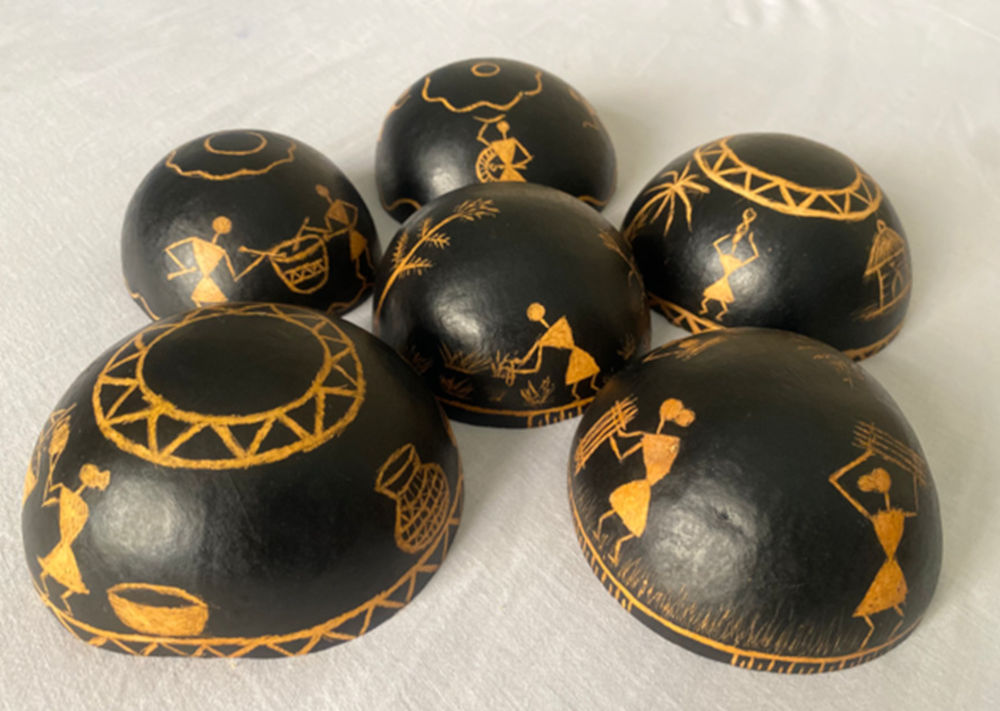
Calabash (small and medium sizes) Gourd, black Paint/Polish
Rhythms of Our Roots
I grew up with the sounds, sights, and rhythms of African life shaping me. I hear the songs that rise in the fields, I see the steady hands working the soil, and I feel the laughter that carries us through even the most arduous labour. These moments live with me, and they guide my work. Rhythms of Our Roots honors this spirit, showing that the everyday life of our people is art in itself.
I sit with the calabash, a vessel that holds both memory and meaning in our culture. I prepare it with patience, darkening its surface to convey the depth of history. Into this darkness, I carve golden lines, shaping figures, gestures, and patterns that tell stories of farming, harvesting, and gathering together. The roundness of each calabash feels like a small world, where black and gold move in balance, struggle and joy, labour and celebration, tradition and love.
As I carve, I hold close the truth that no act is too small. Carrying water, planting seeds, sharing food, these are not minor things; they are the heartbeat of community and the foundation of who we are. My work aims to show that these rhythms are as significant as any history written in books, and that our heritage continues to breathe life into the daily rituals we live and share.
Each calabash becomes a vessel of memory. It carries the pulse of our people, keeping alive the movements and traditions that shape us. In creating them, I invite us to see the beauty in our own stories, to know that the ordinary is already extraordinary, and to keep walking forward in step with the rhythms that root us to the land and to each other.
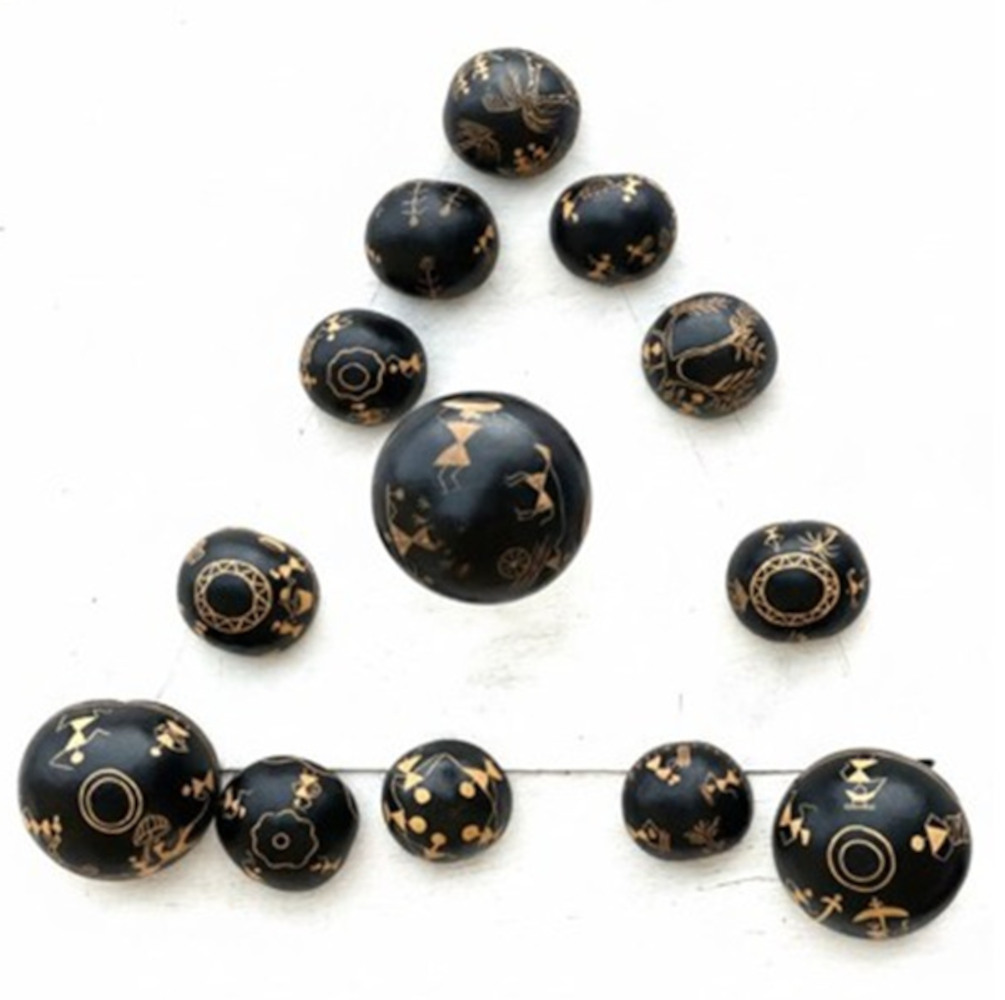
The Rhythm of Our Roots is a collection of calabash artworks that visually narrate the essence of African life through symbolic forms and traditional motifs. The smooth, rounded calabash surfaces represent wholeness, continuity, and the cycle of life, while the contrasting dark background and warm golden patterns echo ancestral memory and storytelling.
The artwork highlights family as the core of African society. Figures are shown interacting and working together, suggesting care, cooperation, and shared identity within the household. These images reflect how values, culture, and responsibilities are passed from one generation to another.
Scenes inspired by fishing emphasize rivers and water bodies as lifelines for many African communities. The depicted activities suggest patience, teamwork, and respect for nature, reinforcing the idea that survival is closely tied to the environment. In portraying farming, the artwork celebrates the land as both a provider and a sacred space, where hard work, seasons, and hope intersect.
Elements of household chores, such as carrying loads and preparing for daily needs, honor the unseen labor that sustains families. Rather than portraying these tasks as burdens, the artwork presents them as acts of dignity, resilience, and cultural pride. The presence of rhythmic patterns and repeated symbols further captures celebrations, dances, and communal gatherings, reflecting joy, unity, and shared cultural expression.
Overall, The Rhythm of Our Roots preserves African lifestyle and values by turning everyday activities into visual stories. The work affirms that culture lives not only in grand events, but in daily routines, collective labor, and the enduring rhythm of community life.

Asare Jennifer Clara is an art student from the University of Education, Winneba, studying in the Department of Art Education. She has a deep love for art and creative expression, which reflects strongly in her work. Jennifer is particularly passionate about creating decorative calabash pieces that tell stories drawn from African daily life, culture, and lived experiences. Through her art, she explores tradition, identity, using calabash as a medium to celebrate African heritage and everyday moments. Her works invite viewers to connect with familiar narratives while appreciating the beauty and meaning embedded in African artistic practices.