
By Lukas Sterzenbach
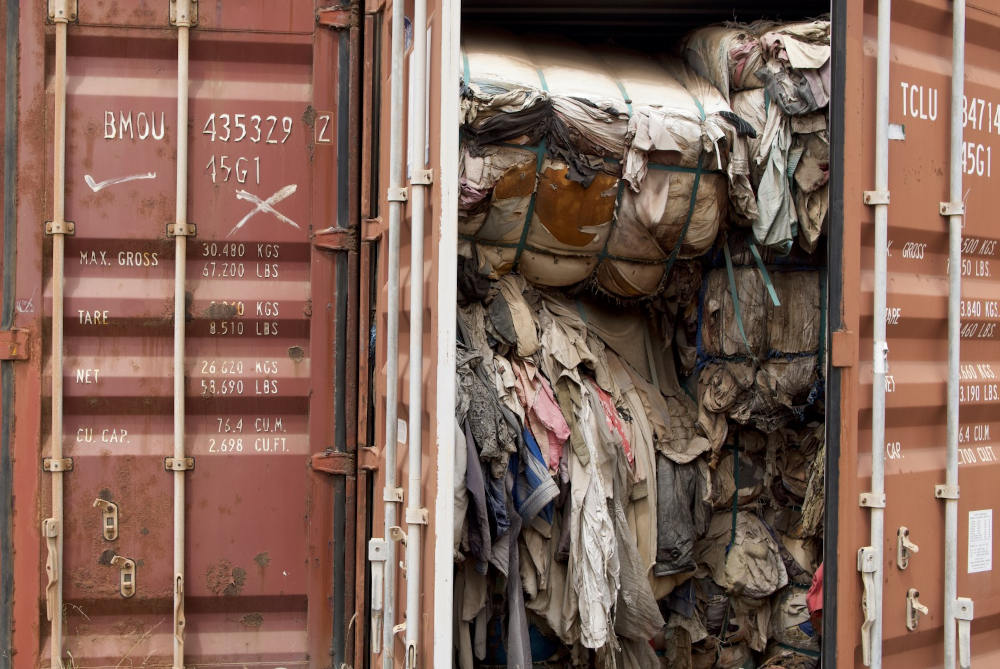
Container full of clothes in the industrial area at Tema Harbour, Accra, Ghana, Photo: Lukas Sterzenbach
Scraps and Condemn is an art project that focusses on the exportation of textile and electronic waste from Europe to Africa. It traces the connections between European consumption and systems of labour, extraction, and environmental exploitation that repeatedly culminate in Ghana.
Beginning with a research phase by the author in Accra and Winneba, Ghana in March 2026, the project evolved through site-based investigations in Ghana (Agbogbloshie and the industrial area surrounding Tema Harbour, the largest harbour in Greater Accra), before continuing in Vienna, Austria.
Personal Background
Studying at the Academy of Fine Arts Munich and, as part of the New Futures Collective and the EVC network, I was invited to join the Creative Arts and Culture International Research Conference, which took place in early 2026, in Winneba, Ghana. Before this conference, I was responsible for curating an exhibition featuring artistic contributions from Germany as part of the conference. In Ghana, I was also co-hosting an art workshop for art education students at the University of Education Winneba together with the New Futures Collaborative, and I used the chance to start my research for this artistic research project Scraps and Condemn.
It was inspired by my artistic practice during the last 3 years, in which I have examined narratives surrounding material consumption, ecological transformation, and human relationships to waste and landscape. During my stay in Ghana, these questions unfolded into a broader investigation of electronic and textile waste sites across the Greater Accra Region.
Being invited to co-organize exhibitions for the Climate Biennale Vienna in Vienna in April/May 2026, I could present my research from Ghana in this context and develop it further. The Climate Biennale Vienna is “a transdisciplinary festival at the intersection of art and climate” seeking to create “new ways of thinking, feeling and acting in response to climate change.” (Link)
My own contribution to the exhibitions brought together photographs taken in Ghana, installation elements, and written works as part of a wider investigation into global waste circulation, responsibility, and consumption. The Exhibition also included contributions by two students from Winneba, Ghana, that I met during my stay in Accra: Boniface Ayindoo Anazoore, working as a “burner” (a burner is recovering valuable metals from electronic waste through burning), and Kayrian Kiki, an art student at UEW. Both examine the growing problem of textile and electronic waste from the perspective of their own everyday lives and surroundings.
The title Scraps and Condemn emerged, when Boniface Ayindoo Anazoore explained to me, that the electronic devices he receives to burn and recover metals are sold by vendors walking through the waste sites shouting “condemn, condemn!”. Sometimes the electronics are also described as “spoiled.” Imported electronic waste that once had a function is now condemned. It is spoiled, stripped of value, and reduced to scraps to be burned, recycled, and sold again.
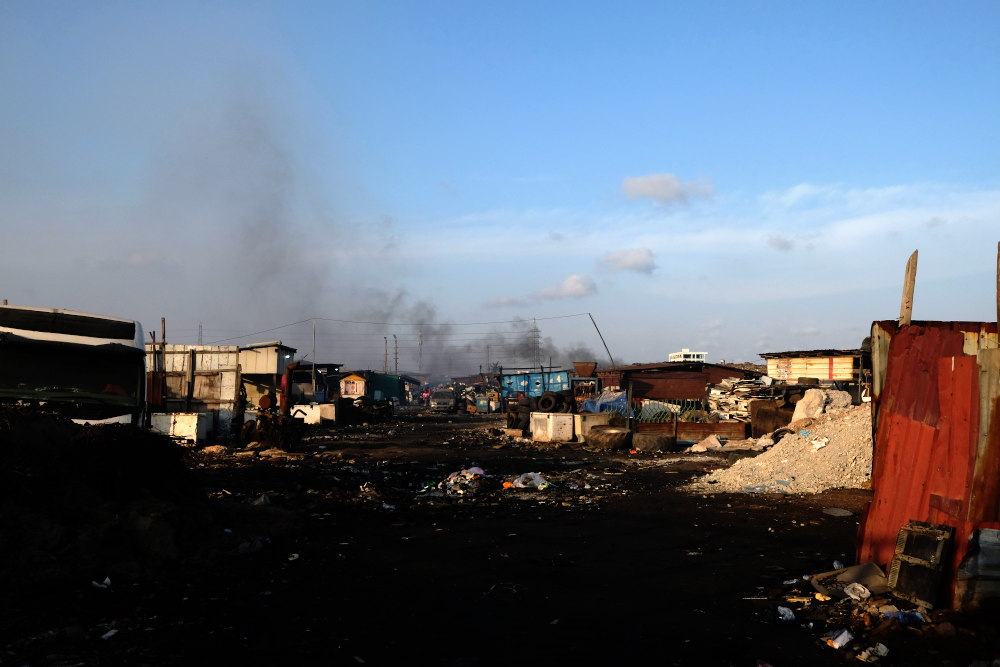
Fig. 1: Electronic waste dump Agbogbloshie, Accra, Ghana, Photo: Lukas Sterzenbach
Call with Boniface Ayindoo Anazoore, a student and burner
To better understand the experience of working at an electronic waste site, I contacted Boniface Ayindoo Anazoore, a 30-year-old student from Kumasi who works as a burner in Accra in his free time. I requested him to contribute his perspective to the research and exhibition in Vienna. The following text is based on a phone conversation with Boniface. It is a transcription of what he shared with me and presents his experiences and reflections in his own words.
Some of the work that we are doing in Ghana here, it's just because of we don't have any option to go. We know that some work is not good for our health. But what are we going to do? We don't have any option.Most of us are students, we don't get jobs.And most of our parents lack financially. School is expensive. If you say you will not go they don't care.
If you are a student, they will give you a vacation, they will give you a break that you should go and rest. Instead of to go and rest, you will have to go and look for money. If you think if you go there, you can get money small, you have to go. You can't wait. If you sit at home you will be suffering.
Since I wrote the Basic Education and Certificate exam in 2018, I was in Accra to work for scraps. We are the burners. We have people that go around and buy materials. They will tell us to burn the dismantled parts. They bring wires. We burn them. So that they will go and sell again.
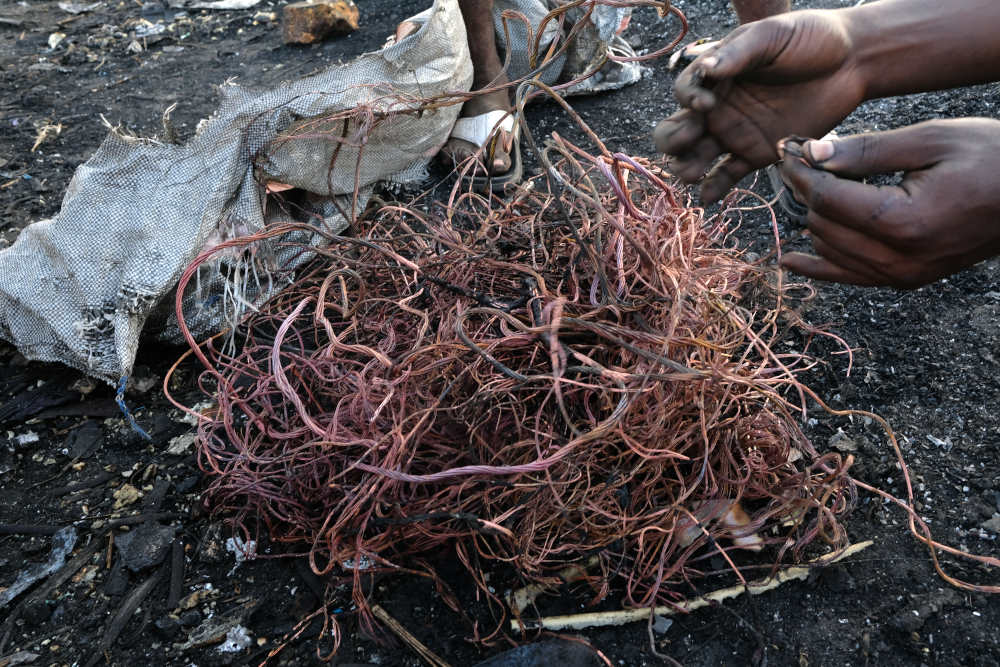
Fig. 2: Burned copper cables at electronic waste dump Agbogbloshie, Accra, Ghana, Photo: Lukas Sterzenbach
Right now we are dealing with copper. On Monday we go to work and wait for the scrap dealers. This work is not something that has a fixed price. It depends on the day. If your customers bring a lot of goods maybe you get something. If no person brings goods that day, you can't get enough money and you have to borrow money to eat.
We the burners, we are far from those who are dismantling. And you can't know how much money the sellers and factories are getting. They look at how I suffer and say you take twenty cedi, or thirty cedi, take ten cedi,
take five cedi. You have done well.
Some electronics work, but if it spoils, you can't repair it. Assuming if a charger cable spoils, how will you repair it? It doesn't really work. You can't repair it. The wire, how will you repair it? It's too complicated. You can't do anything unless you burn it all and send it back so that they can redo it.
This work is recycling. If a copper cable spoils, we will recycle it and they send it. The same thing which we always get: we go to the market and buy new things. When something spoils, you take it to them and they will now remold it again. From there they will take it to Tema harbour. From Tema they take it to outside of Ghana. They send it.
If you get a black nose, that means you are sick. The smell can sometimes cause you to get sick, too.
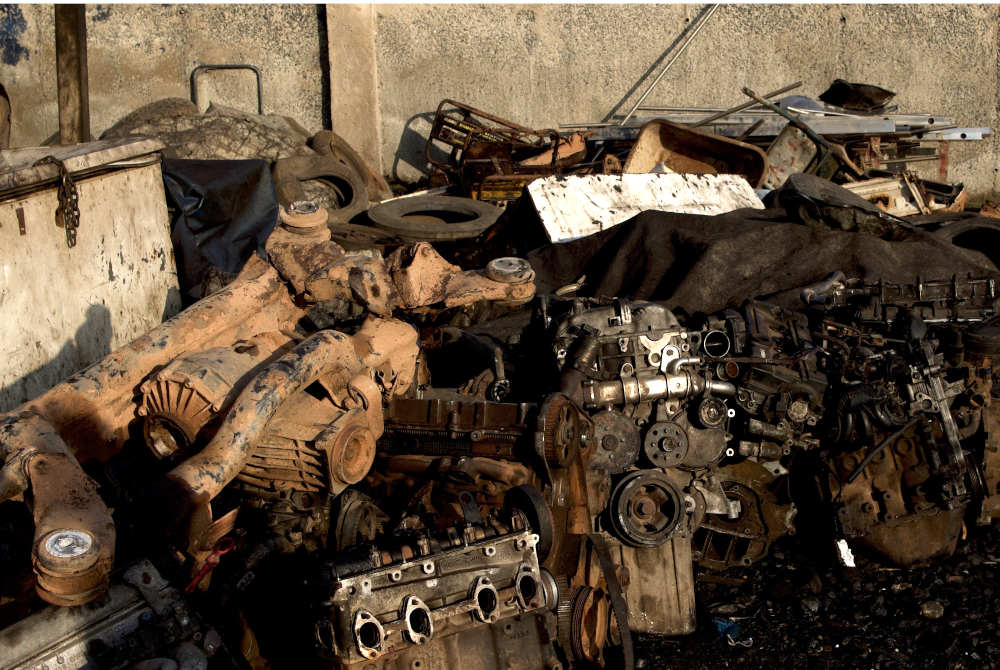
Fig. 3: Electronic waste dump Agbogbloshie, Accra, Ghana, Photo: Lukas Sterzenbach
Global Material Flows, Local Consequences
In the EU, more than 11 kg of electronic waste per person are generated annually, along with around 6.9 million tonnes of textile waste. A significant portion of this waste leaves Europe and escapes perception. Materials that are supposedly still functional or intended for reuse reach landfills such as Agbogbloshie, where they are separated into valuables and waste. Devices are dismantled and burned in order to extract and resell metals such as copper, aluminium, or iron.
In this process, not only reusable materials emerge, but also highly toxic substances such as dioxins, heavy metals, and fine particulate matter are produced, which become part of air, soil, and water. The toxic products of recycling become not only part of the environment, but part of the bodies of the workers and residents—in the form of respiratory diseases, neurological damage, and long-term stress on organs. Mixed with rubble, soil, and burned residues, the materials accumulate and form new sediment layers.
The recovered metals are sold through local informal networks and re-enter global production chains. At the same time, an economic cycle emerges in which materials are traded through informal hierarchies and fed back into global production systems. While value is generated along these chains, working conditions on site remain shaped by extremely low wages. A system emerges in which valuable materials are returned to exporters, while ecological and health consequences remain locally in Ghana. Responsibility is externalized, while the foundations of global consumption continue to be stabilized.
Installation in Vienna
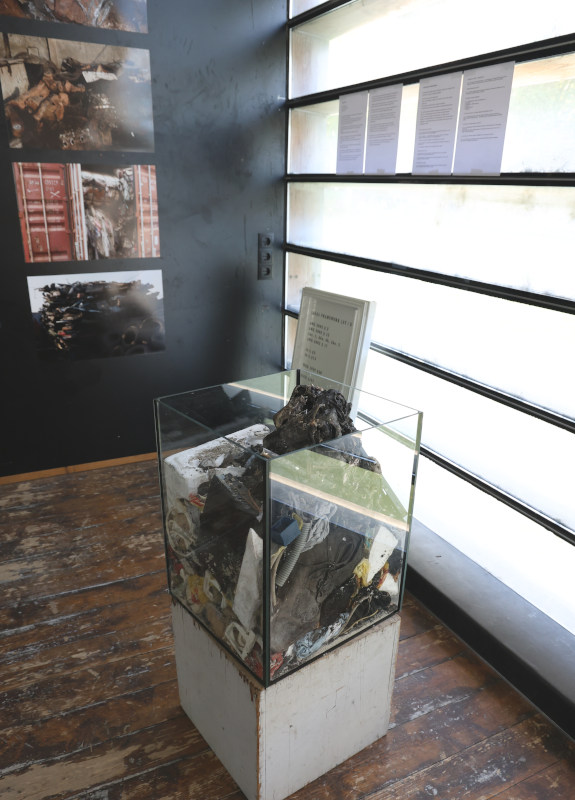
Figure 4: Part of the installation of „Exported Goods“ by Lukas Sterzenbach for Climate Biennale Vienna, Photo: Veronika Mozberg
Inside the glass, such a sediment layer is condensed. Composed of charred textile waste, metal residues, and plastic fragments collected from landfills in Ghana and supplemented by waste from Vienna that is typically exported. A material body, shaped by heat and physical force. A condensation that renders traces of global consumption cycles visible and points toward a future in which waste becomes a permanent component of landscape and material. Yet the visual, as well as ecological and health burdens, evade perception and are systematically displaced onto low-income and marginalized communities.
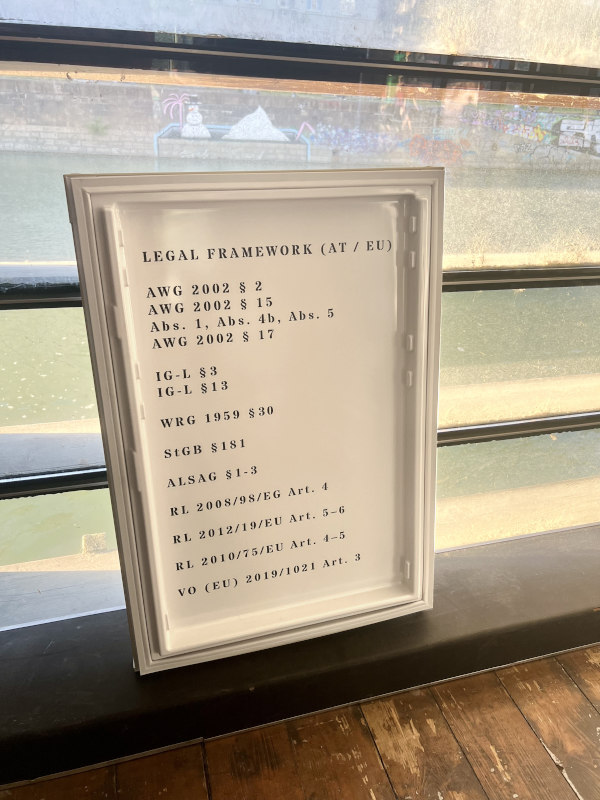
Figure 5: Printed fridge door, part of the installation of „Exported Goods“ by Lukas Sterzenbach for Climate Biennale Vienna, Photo: Lukas Sterzenbach
Poems by Kayrian Kiki
The Weight of “Obroni Wawu”
A reflection on the name “Dead White Man’s Clothes“
The bales arrive at Tema like heavy, salted sighs,
Packed with the “extra” of a thousand foreign lives.
We call them Obroni Wawu—the clothes of the one who died,
Because only a ghost could leave so much behind,
Only a spirit could discard what is still so new,
A flood of “too much” for the hands of the “too few.”
They ship the fads that lasted only a week,
Exporting the boredom of the wealthy and the sleek.
It spills into the stalls of Kantamanto’s maze,
A mountain of polyester in the humid, golden haze.
The thread of exploitation is the stitch we didn’t choose,
Woven into shirts we wear, but can never truly use.
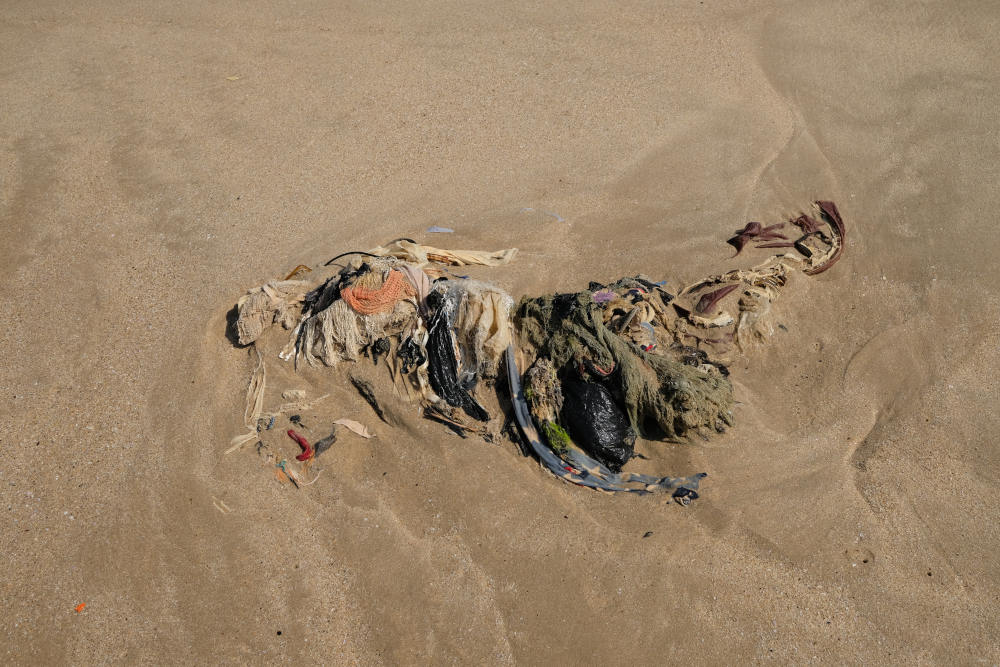
Figure 6: Beach in Accra, Ghana, Photo: Lukas Sterzenbach
The digital ghosts of a thousand cities
Arrive in containers, heavy with “used.”
Discarded dreams from the Global North,
In tangled wires and screens bruised.
But the crates hold more than plastic and glass,
They carry the weight of a silent trade—
The exhaustion of a distant shelf,
And the debt of a choice someone else made.
They export their hunger for the new,
Along with the smoke and the jagged tin,
Folding their waste into Ghanaian soil,
Where the labor of the hands must begin.
But look closer at the traces left—
The copper veins pulled from the dark,
There is a voice in the scorching air,
A steady flame, a resilient spark.
It is a song of survival, sharp and clear,
Demanding a future that’s built to last,
Where the worker is seen, the labor is gold,
And the future is more than a world’s broken past.
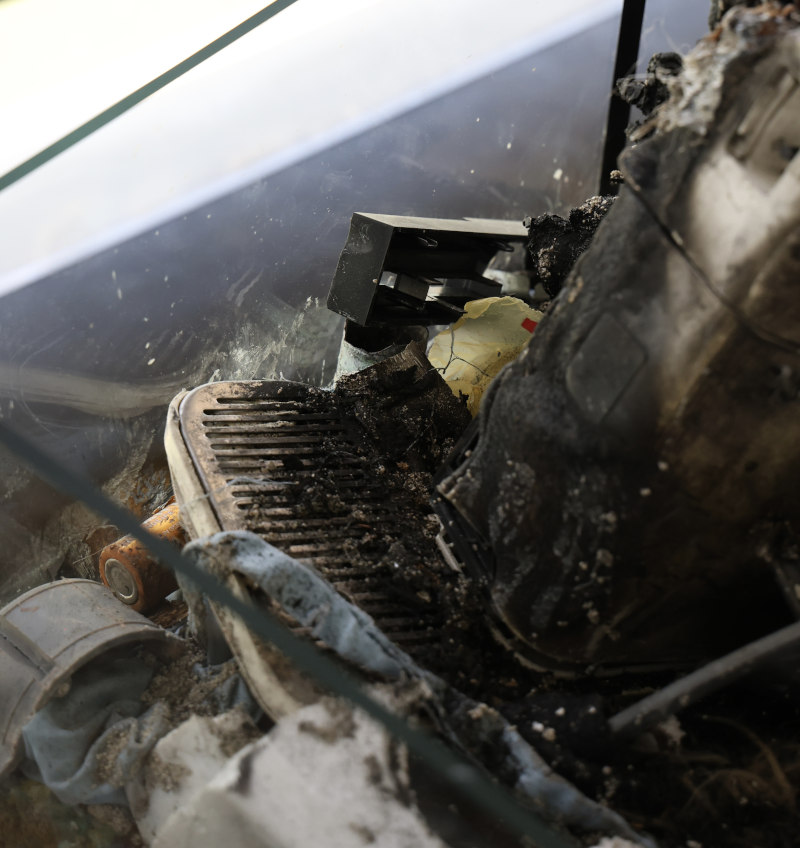
Fig. 7: Exported Goods. Installation by Lukas Sterzenbach for Climate Biennale Vienna. 2026. Photo: Veronika Mozberg
Appendix
Legal framework (selected excerpts)
The following legal foundations demonstrate how clearly the handling of waste in Austria is regulated in order to protect the environment and human health. And yet, despite these regulations, Europe exports large quantities of electronic and textile waste to Ghana. To places where these rules do not apply, and where it enters into practices that these regulations are meant to prevent. What is regulated and controlled here is enabled elsewhere. The consequences of consumption are displaced and the responsibility shifts.
Despite stricter EU regulation announced from 2026 through Regulation (EU) 2024/1157, which aims to more tightly control waste shipments, grey areas remain. Waste continues to circulate as “used goods,” thereby evading regulation. Global raw material chains and their exploitative structures are further sustained; recycled metals such as copper from Ghana remain part of the market and of European consumption.
Waste Management Act 2002 (Austria)
- “… collection, storage, transport and treatment … must not impair public interests.” (§ 2)“
- “Waste shall be … handled properly so that public interests are not impaired.” (§ 15.1)
- “Treatment shall follow the state of the art.” (§ 15.4b)
- “No risk to human health or the environment …” (§ 15.5)
- “Disposal only in approved landfills.” (§ 17)
Immission Control Act – Air (AT)
- “Limit values … to avoid harmful effects on health and environment.” (§ 3)
- “Action programmes in case of exceedances.” (§ 13)
Water Rights Act (AT)
- “Adverse impacts on water bodies are to be avoided.” (§ 30)
Criminal Code – Environmental Endangerment (AT)
- “Pollution or danger to human life … shall be punished.” (§ 181)
Contaminated Sites Act (AT)
- “Identification, assessment and remediation … prevention of dangers.” (§ 1–3)
European Union
Waste Framework Directive (2008/98/EC)
- Prevention → Reuse → Recycling → Recovery → Disposal (Art. 4)
WEEE Directive (2012/19/EU)
- Collection systems and proper treatment of e-waste (Art. 5–6)
Industrial Emissions Directive (2010/75/EU)
- No operation without permit; protection of air, water, soil (Art. 4–5)
POPs Regulation (EU) 2019/1021
- Persistent pollutants are prohibited or restricted (Art. 3)
All listed regulations would apply to the informal waste processing practices in Ghana. And yet, waste declared as reusable is being shipped to sites such as Agbogbloshie. Devices are dismantled and burned to extract metals. Toxic substances enter air, soil, and water—and the bodies of workers and residents. Value circulates. Consequences remain.