Grueto Uebo: Globalisation, Commercialisation and Politicisation
Hokusai’s color woodcut, “The Great Wave”, is now one of the most famous images of Japan in the world. However, its meaning has changed considerably since it was created in the mid-19th century. This article examines the historical impact of “The Great Wave” against the backdrop of globalization, commercialization, and political instrumentalization. Selected examples demonstrate how the motif has become increasingly detached from its original historical and cultural context in the 20th and 21st centuries. Rather than viewing the diverse reinterpretations as a loss of meaning, the essay considers them to be an expression of the image’s enduring transcultural impact.
Introduction
Katsushika Hokusai’s “Great Wave” is now one of the most widely reproduced works in Japanese art history. From the nineteenth century onwards, the color woodcut attracted considerable attention in Europe and North America with the rise of Japonism. Fascination with Hokusai’s “ukiyo-e” prints, as well as those of other Japanese artists, continued into the 20th and 21st centuries, as demonstrated by numerous exhibitions in European and American museums.[1] At the same time, the image increasingly moved away from its original context and took on new meanings.
While Hokusai’s work was originally part of the popular visual culture of the Edo period, “The Great Wave” has developed numerous new symbolic meanings and interpretations in the 20th and 21st centuries. Christine Guth describes this process as the “biography” of an image, with its meanings constantly expanding through transcultural exchange.[2] Based on this idea, this article looks at how and in what contexts “The Great Wave” has been reinterpreted since the second half of the 20th century. Three aspects are examined in particular: the increasing commercialization of the motif; its use as a symbol for (environmental) disasters; and its role within Japanese and international visual politics.
Commercialization, Products, Lifestyle
The widespread commercialization of “The Great Wave” is a key factor in its enduring popularity. Since the second half of the 20th century, the motif has appeared on a wide range of products, particularly in museums. Posters, books, postcards and textiles featuring the print are often purchased as souvenirs. Despite being greatly simplified and placed in new contexts through its reproduction on a wide variety of surfaces, this type of commercialization usually retains some connection to the original work.[3]
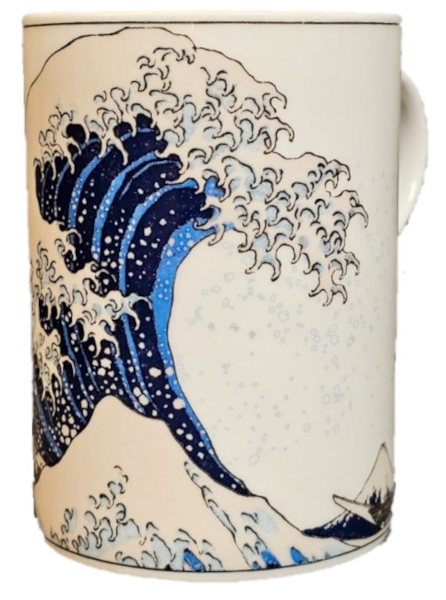
Figure 1: Mug from the British Museum, © Private photo.
Additionally, there are forms of commercialization in which any connection to Hokusai or to Japan is increasingly lost. In these cases, “The Great Wave” is selected as a product motif primarily for its perceived timelessness and visual appeal, rather than for its historical or cultural associations. Since the 1970s, numerous contemporary brands have used the image on T-shirts and other items of clothing. In these contexts, the image almost always appears in a modified form, as the emphasis lies on creating a visually striking design associated with a particular lifestyle rather than on producing a souvenir or a direct reproduction of Hokusai’s work. The sacred Mount Fuji, which plays a central role in the original composition, is often removed, allowing “The Great Wave” to function as a simplified graphic motif. This adaptation is especially popular among sports brands, particularly in the skateboarding and surfing scenes.[4] In such products, the wave no longer refers to a specific work of art but instead conveys a sense of movement, freedom, and power. Consequently, the motif operates less as a reproduction of the artwork and more as a lifestyle-oriented design.[5]
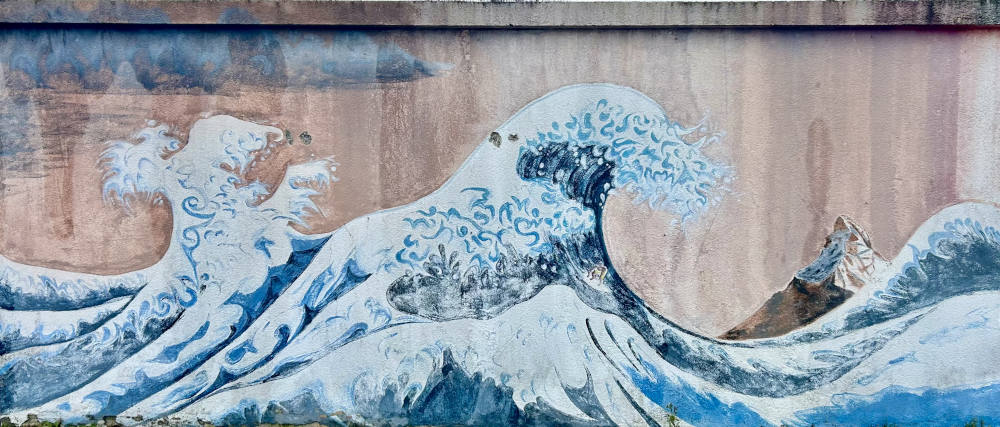
Figure 2: Mural of the “Great Wave” and the Mattehrhorn with a surfer, Switzerland, © Private photo.
This development demonstrates the extent to which “The Great Wave” has become detached from its original context, while the motif’s visual simplicity and high recognizability are precisely what enable and promote its recontextualization.
“The Great Wave” as a symbol of (environmental) disasters
In addition to consumer culture, the use of “The Great Wave” as a symbol of disaster has played a central role in its modern history. As early as the end of the 19th century, the image was associated with tsunami events in Europe.[6] From the 1960s onwards, this association became increasingly prevalent, as seen in the use of a simplified version of the wave as the logo of the International Tsunami Information Centre.[7]
However, this comparison is problematic. Scientists have pointed out that Hokusai's depiction is not of a tsunami, but of a so-called “monster wave”. [8] Using “The Great Wave” as a warning symbol could therefore give a false impression of the natural phenomenon and lead to dangerous misconceptions. Nevertheless, the motif remains popular to this day thanks to its powerful symbolism and international recognition.[9]
Beyond its specific reference to the tsunami, “The Great Wave” is increasingly used as a general symbol of disaster. In political caricatures, monuments and media representations, it represents sudden, overwhelming events.[10] The motif also appeared repeatedly in connection with the 2011 Fukushima nuclear disaster, for example in satirical depictions criticizing government decisions.[11] In those examples, the wave can be seen as a representation of sudden danger, overwhelming force and violence – in short, of disasters in general.
“The Great Wave” as a symbolic image of an international Japan
While many contemporary adaptations of “The Great Wave” originate in the West, it is worth exploring its relevance in Japan. Although the color woodblock prints and drawings from the Edo period triggered a trend known as Japonism in the European art world at the end of the 19th century, they lost much of their significance in Japan during the same period and were even described as “vulgar”.[12]
However, although “ukiyo-e” art had lost its significance in Japan, its popularity in Europe and North America was well recognized. After the Second World War, the Japanese government deliberately used these traditional, popular images for international self-promotion. For instance, stamps featuring “The Great Wave” were designed to align with Western perceptions of Japan as a culturally rich nation, despite hardly reflecting post-war Japan.[13]
As part of the increased international marketing of Japanese culture since the 1990s, “The Great Wave” has also gained new visibility within Japan. It has appeared in tourism campaigns, public spaces, and international advertising strategies. Since 2024, “The Great Wave” has also featured on the thousand yen note. However, these marketing and product placements still primarily appeal to a foreign audience.[14] So, what connection does Japanese society today have to Hokusai’s “Great Wave”?
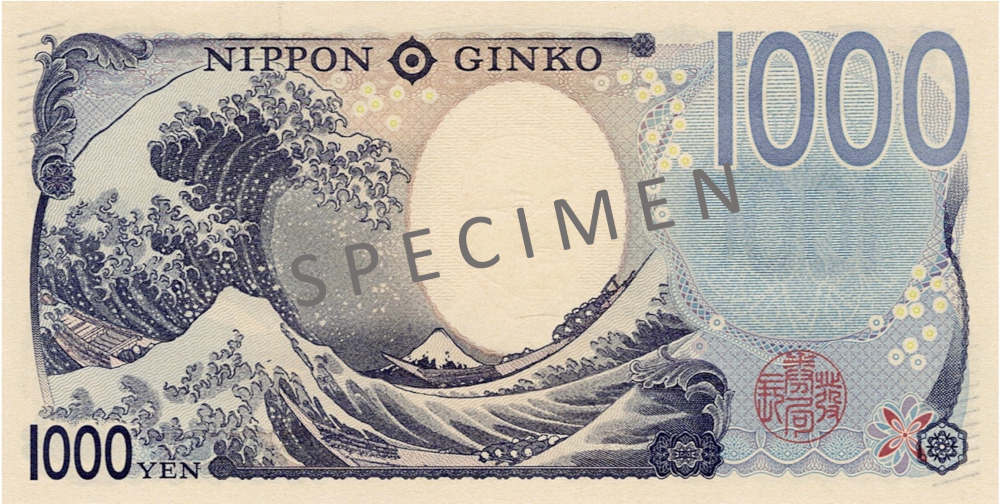
Figure 3: 1,000 yen note, reverse side. © Creative Commons.
In his 2019 analysis of Japanese school education, Nobumasa Kiyonaga observes that “The Great Wave” plays a significant role in contemporary art education and is commonly addressed in the curriculum. His study shows that “ukiyo-e” color woodblock prints have become well established in Japanese schools and have shed their former “vulgar” stigma.[15] Although Japanese society now recognizes “The Great Wave” as part of its artistic heritage, and the image is frequently cited in international contexts as a visual symbol of Japan, the significance attributed to it in Japan remains less than in the West.
Conclusion
The history of the “The Great Wave” illustrates how a work of art’s meaning can be transformed through global circulation, commercialization and political appropriation. As the motif has become increasingly separated from its original historical context, it has gained the flexibility to function in a wide range of settings.
Following Christine Guth’s concept of an image’s biography, these diverse meanings should be understood as part of the image’s ongoing history.[16] Today, “The Great Wave” serves as a visual template for depictions of waves worldwide, influencing shared perceptions of nature, danger, and motion across cultures. However, the image’s biography is far from complete. Through new media, political developments, and cultural exchanges, “The Great Wave” will continue to gain new meanings.
[1] This is evident from the numerous exhibition catalogues that have been published for these exhibitions. See: Boller (1945), Katsushika Hokusai 1760 – 1849, Zürich; Basil Gary (1948), The work of Hokusai 1760-1849: woodcuts, illustrated books, drawings and paintings, a catalogue of an exhibition held on the occasion of the centenary of his death, Ausstellungskatalog des British Musuem; Anon (1951), Rembrandt, Hokusai, Van Gogh, Ausstellungskatalog des Stedelijk Museums in Amsterdam; De Gruyter, W.J. (1952), Rembrandt, Hokusai, Van Gogh, Ausstellungskatalog des Kunstmuseum Basel; Anon (1955), Hokusai. Handzeichnungen und Aquarelle, Ausstellungskatalog des Museums für Kunst und Gewerbe in Hamburg; Anon (1958), Hokusai (1760-1849) - dessins, aquarelles, estampes, livres, Ausstellungskatalog der Galerie Berès in Paris; Harold P. Stern (1960), Hokusai. Paintings and drawings in the Freer Gallery of Art Smithsonian Institution, Ausstellungskatalog der Freer Gallary in Washington D.C.
[2] Christine Guth (2015), Hokusai’s Great Wave. Biography of a Global Icon, Honolulu, 11f.
[3] See: Shop des British Museum, Version from 30.01.2026. https://www.britishmuseumshoponline.org/inspired-by/inspired-by-hokusai.html?p=1
[4] Well-known sports and lifestyle brands such as Roxy, Patagonia and HUF use the motif on a variety of clothing items.
[5] Christine Guth (2011), Hokusai’s Great Waves in Nineteenth-Century Japanese Visual Culture, in: The Art Bulletin 93(4), 468–485, 24.
[6] Guth (2015), Hokusai’s Great Wave, 55f.
[7] See: International Tsunami Information Center, Version of 30.01.2026. http://itic.ioc-unesco.org/index.php ; Doak C. Cox (2001), The Inappropriate Tsunami Icon, in: The International Journal of The Tsunami Society 19(2), 87–92, 90.
[8] Ibid., 91f.; Wendy S. Shaw, James Goff (2016), Misrepresentation in tsunami warning signage: iconic denial, in: GeoJournal 81(3), 333–336, 333.
[9] For more on the dangers of misguided symbolism, see: Ibid., 335f.
[10] Examples include the monument “Die Woge” (The Wave) by Tobias Stengel, created after the 2002 flood disaster in Dresden, and a monument in Smith Point County Park, New York, commemorating a 1996 plane crash. The wave motif becomes particularly abstract when it is used merely as a symbolic image, as with the “wave of refugees” on a float at the Cologne Carnival in 2016. See: Anon (2005), Woge auf der Augustusbrücke. Jury entschied über Gestaltung zum Thema Flut 2002, in: Dresden.de. Version of 30.01.2026. https://www.dresden.de/de/rathaus/aktuelles/pressemitteilungen/archiv/2005/06/c_100.php ; Guth (2015), Hokusai’s Great Wave, 193f; Anon (2016), Zehntausende feierten Kölner Karneval, Bild 28, in: Kleine Zeitung. Version from 30.01.2026. https://www.kleinezeitung.at/international/4920991/Trotz-Sturmwarnung_Zehntausende-feierten-Koelner-Karneval-Anzeigen
[11] Liu Caiyu, et all (2021), Japan’s public image crumbling after nuclear wastewater dumping decision, in: Globaltimes, Version from 10.09.2021. https://www.globaltimes.cn/page/202104/1221726.shtml
[12] Shigemi Inaga (2003), The Making of Hokusai’s Reputation in the Context of Japonisme, in: Japan Review (15), 77–100, 81.
[13] Guth (2015), Hokusai’s Great Wave, 112f.
[14] Michiko Mae (2013), Nipponspiration als transkulturelle Grenzüberschreitung in der Kunst. Japonismus und japanische Populärkultur, in: Michiko Mae, Elisabeth Scherrer (Eds.), Nipponspiration. Japonismus und japanische Populärkultur im deutschsprachigen Raum, Köln, 21–49, 23f; Nobumasa Kiyonaga (2020), Die Monsterwelle von Hokusai - Zur Wahrnehmung von Hokusais „Die grosse Welle vor Kanagawa“ an japanischen Schulen, in: Exploring Visual Culture, Version from 30.01.2026, 8. https://www.explore-vc.org/en/objects/katsushika-hokusai-nami-ura-the-backside-of-the-wave.html ; Reinhard Zöllner (2006), Geschichte Japans. Von 1800 bis zur Gegenwart, Paderborn, 425.
[15] Kiyonaga (2020), Die Monsterwelle von Hokusai, 9f.; Shigemi Inaga (2007), Is Art History Globalizable? A Critical Commentary from a Far Eastern Point of View, in: James Elkins (Eds.), Is Art History Global?, New York. Revused version from June 2007, 1–18, 1ff.
[16] Guth (2015), Hokusai’s Great Wave, 11f.