Highlighting Decolonial Art Education and Indigenous Knowledge
All photographs courtesy of Anthony Nyame
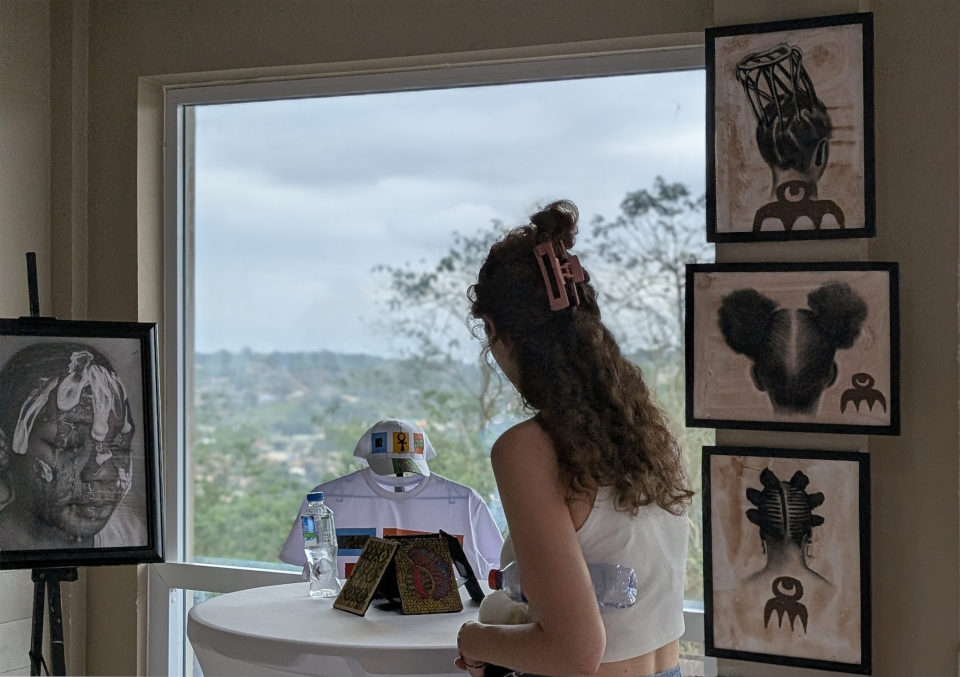
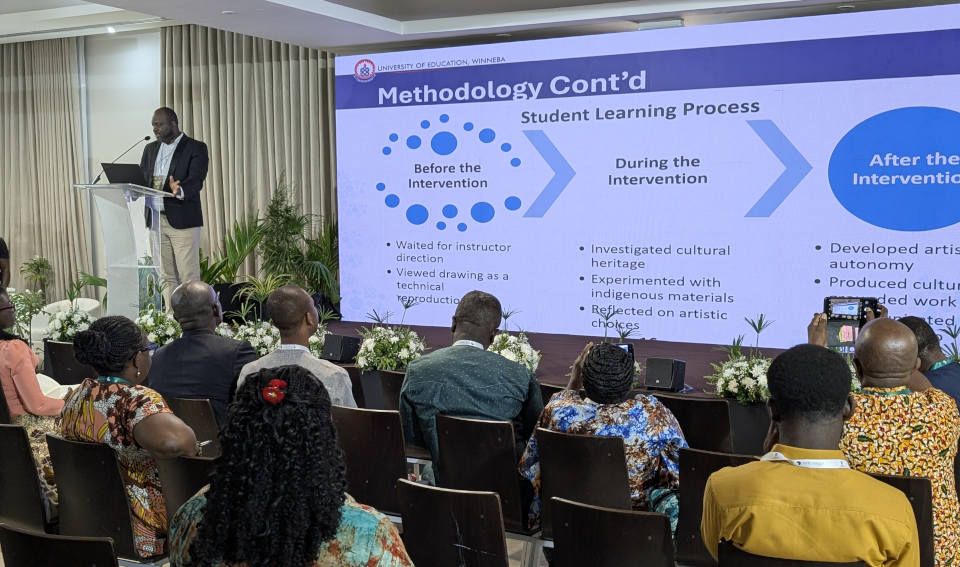
Student creators from the University of Education, Winneba (UEW), Ghana, asserted a bold, culturally grounded presence at the 2026 Scholarship of Teaching and Learning (SoTL) Africa Conference, held at Ashesi University, Ghana, from August 28–29, 2026. Integrated directly into a scholarly presentation by UEW art educator Ebenezer Kow Abraham, titled “SANKOFA: A Decolonial Framework for Art Education and Curatorial Practice”, the exhibition operationalised the Akan philosophy of Sankofa, demonstrating how returning to ancestral wisdom can actively reframe contemporary pedagogy. Rather than treating African Indigenous Knowledge Systems (AIKS) as mere historical artefacts or decorative add-ons, the initiative positioned indigenous epistemologies as rigorous, primary frameworks for academic inquiry, artistic creation, and curatorial practice.
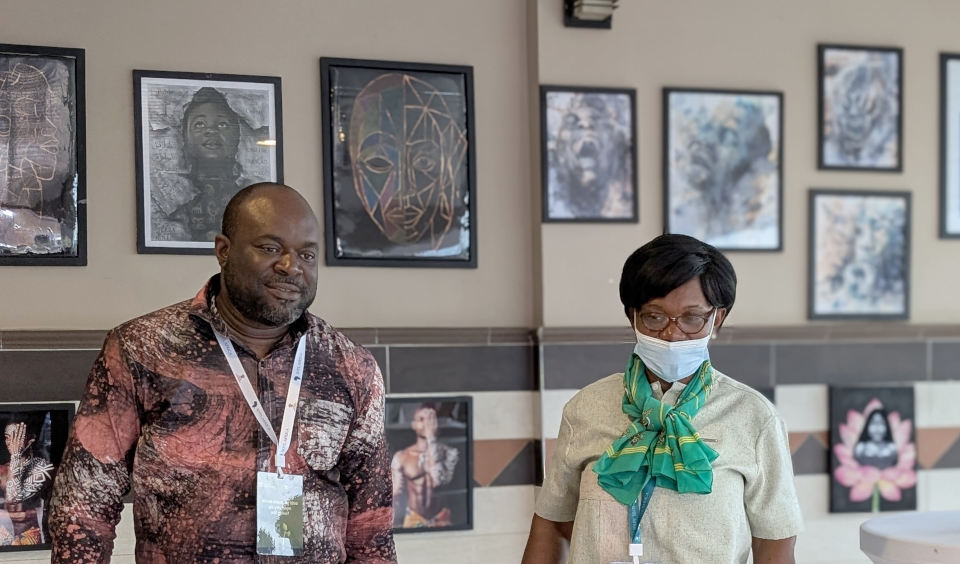
The core of the exhibition showcased works by Level 300 Art Education students from the 2025/26 academic year, including Caleb Kumashie, Ebenezer Kyere Adoma, Bridget Fosuaa, Stanley Adoma, Matilda Benewaa, Maxwell Kwabena Sie, Franklina Awuni, Esther Obenewaa Ansah, Barbara Frimpong, Hubert Asare, Joshua Gyedu, Emmanuel Amofa, Stephen Kwame Yeboah, Grace Kwabea Ntsiamoah, and Rebecca Atiah Nsomah. Translating theoretical research into embodied practice, the students deployed drawings, installations, mixed media, and visual narratives that drew on Adinkra symbols, calabashes, textile traditions, indigenous oral histories, and material markers of migration, such as the chalewote (slipper) and the iconic "Ghana Must Go" bag. These material choices went beyond aesthetics; they served as critical sites of memory and resistance, challenging the historic dominance of Western artistic canons and asserting material sovereignty within the university space.
Conference attendees and scholars responded enthusiastically to the installation, praising both its technical execution and its ability to communicate complex philosophical ideas. Visitors singled out an installation of arranged slippers, which offered a poignant, physical representation of Sankofa and invited viewers to reflect on how everyday material culture can bridge historical memory, personal identity, and future educational possibilities. Comments recorded in the exhibition log consistently affirmed the display as a powerful, thought-provoking testament to the necessity of structural decolonisation in African higher education.
Ultimately, the exhibition validated a central premise of Abraham’s research: when students' lived cultural realities are integrated as foundational academic resources, learners move from passive reproducers of Eurocentric artistic conventions to active researchers, critical theorists, and custodians of their own heritage. By embedding student-led visual art within an international scholarly conference, the showcase highlighted the transformative potential of African-centred pedagogies, demonstrating that true educational decolonisation requires reimagining institutional frameworks so that indigenous ways of knowing actively guide contemporary creative and intellectual production across the continent.