NEW FUTURES ARTS COLLABORATIVE LEADS DE/COMPOSING WORKSHOP AT CERCCA SANKOFAISM CONFERENCE
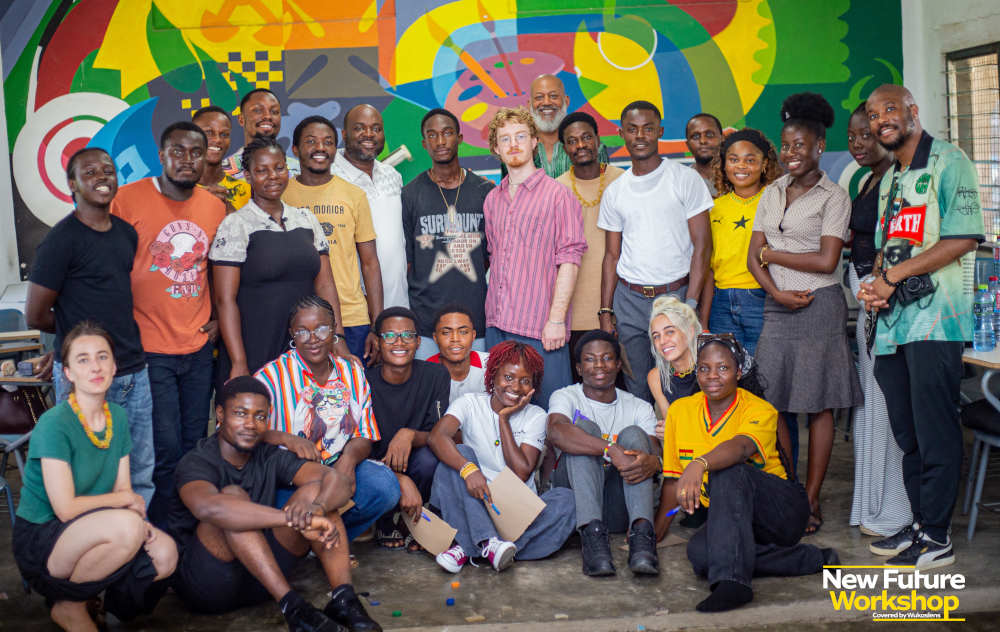
As part of the Centre for Cultural and Creative Arts (CERCCA) global conference on Sankofaism in Arts and Cultural Research, held at the University of Education, Winneba (UEW), the international New Futures Arts Collaborative was invited to lead a two-day intensive workshop for UEW art students. The workshop, titled De/composing, engaged participants in embodied, process-oriented practices that resonate deeply with the Sankofa philosophy, the Akan concept of returning to the past to retrieve what is valuable to move forward.
While Sankofa is often understood as a gentle retrieval of ancestral wisdom, the workshop asked a more difficult question: What must we let decay before we can truly retrieve anything at all? In this sense, De/composing served as a complementary and necessary counterpart to Sankofaism, attending not only to what is worth recovering but also to what must be released, composted, and transformed.
Held on March 26 and 27, 2026, the workshop brought together international artists and facilitators with students from UEW's Department of Art Education. Together, they explored how instruction-based and process-oriented embodied practices can serve as tools for co-creation, dialogue, experimentation, and collective research in times of global polycrisis.
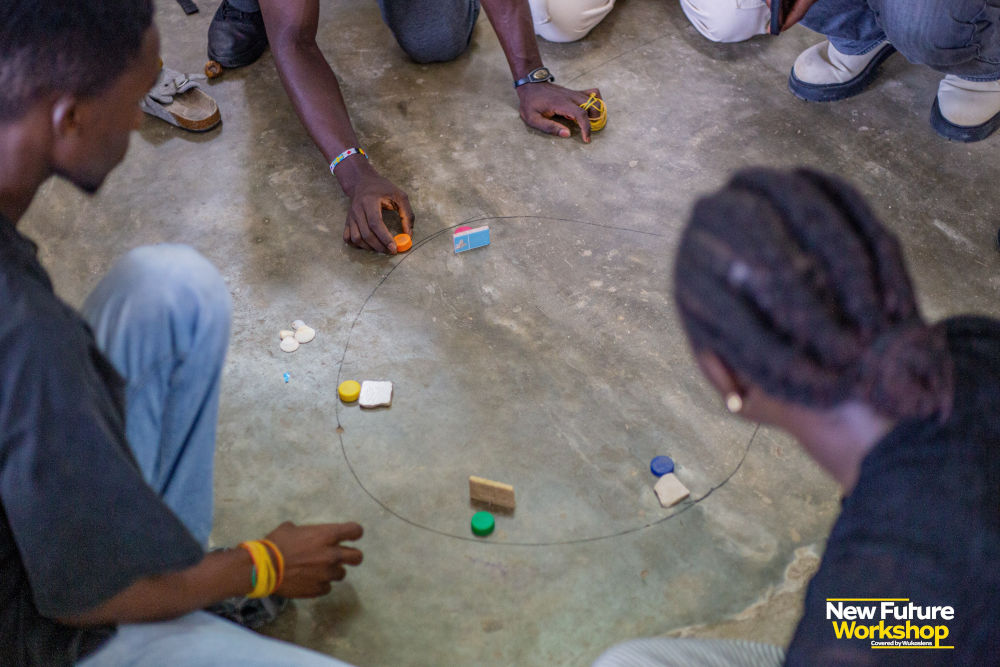
The workshop comprised two main parts. On the first day, titled DE, the focus was on fire, fabric, and the breakdown of symbols. Participants engaged in rituals involving burning and letting go, then moved on to fragmenting and reconstructing visual symbols through movement exercises inspired by Adinkra symbols such as Nkyinkyim, Eban, Sankofa, and Nnoboa. The second day, called COMPOSING, centred on using play to reshape and challenge harmful narratives. Participants collaboratively created games from everyday materials, viewing play as a way to explore ideas collectively and resist creatively.
The artistic research generated during the workshop was later showcased in the exhibition Visual Arts as an Agent of Change in Times of Polycrisis, held on the UEW campus from March 31 to April 2, 2026.
The workshop directly contributed to the core objectives of the CERCCA Sankofaism conference by embodying Sankofa through Practice. Participants physically enacted the return-and-retrieve principle through the Sankofa movement score: Go to the ground. Use your hands, not tools. Unearth what has been hidden. What you find is not what was buried. Again, the workshop argued that retrieval without release risks nostalgia. True Sankofa, in this framing, requires us to also ask: What must we let burn? What patterns, attachments, and systems must be allowed to decay so that new life can emerge from the soil? Adinkra symbols (Nkyinkyim, Eban, Sankofa, Nnoboa) were not used as decorative motifs but as living, embodied instruction sets. The workshop treated these symbols as dynamic frameworks for movement, ethics, and collective labour. The workshop situated Ghanaian philosophical traditions within a global conversation about crumbling infrastructures, fractured sensemaking, and the search for livable futures.
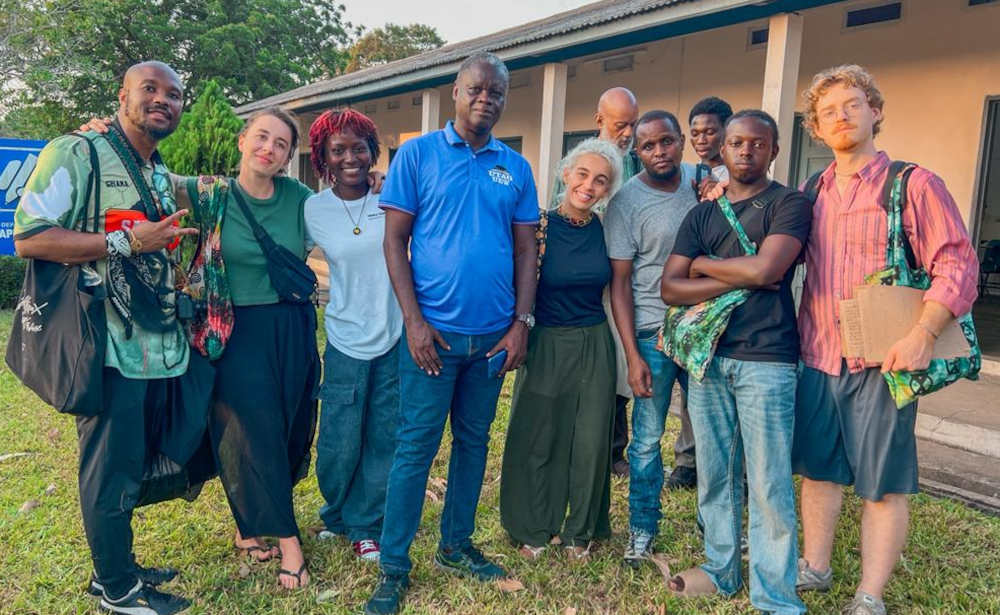
The workshop was designed and delivered by the New Futures Arts Collaborative, with a diverse team of facilitators. Allan Charles Chipman of the United States of America served as Executive Director, while Isadora Canela from Brazil and Elsa Cuissard from France served as Curator and Facilitator. Kirimi Thuranira from Kenya facilitated fire rituals. Agnes Onumah from UEW focused on de/re-composing symbols, and Ngugi Waweru contributed by embodying them. Lukas Sterzenbach from Germany brought expertise in play methodology. Additionally, the group was pleased to welcome Dr David Anderson Hooker from the United States of America as a special guest, specialising in narrative change.
The following staff members of the University of Education and members of the Exploring Visual Cultures Network served as co-organisers of the event: Prof. Patrique deGraft-Yankson, Dr Ebenezer Acquah, Dr Nyamewero Navei, Mr Ebenezer Kow Abraham and Mr Wilberforce Sarpong. Their role was essential in bridging international methodologies and local knowledge systems, ensuring the workshop remained grounded in Ghanaian visual cultures and community practices.
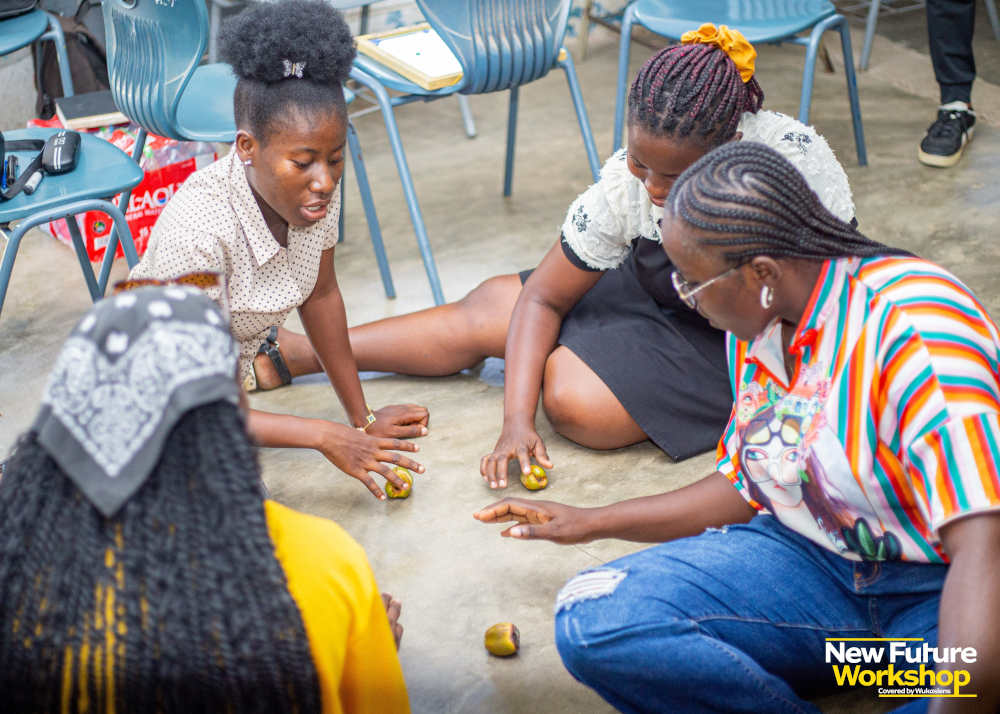
The following students were selected by the New Futures Team to participate in the workshop: Suzana Asigbey, Clara Jennifer Asare, Ivan Kojo Howard, Esther Obenewaa Ansah, Olapade Gloria Funmilola, Martin Tetteh Narh, Ivy Afi Tome, James Wofa Ampiah, Stanley Adoma, Kayrian Adotey Addo, Enoch Hini, Juana Baah-Mensah Turkson, Emmanuel Kyei-Dankwah, Anthony Nyame, Ransford Omani Clottey (Heritage ‘57), Asher Klu, Comfort Markai Marmah, Jackline Tenkorang Adjei, Ekow Tandoh, and Selassie Nyamekye Nkrumah.
From March 31 to April 2, 2026, the Visual Arts as an Agent of Change in Times of Polycrisis exhibition presented traces of the workshop process, burnt fabric fragments reconstructed into new forms, fragmented symbols, video documentation of embodied movements, and participatory stations for games. The exhibition invited viewers not to consume finished products but to engage in a process, to sit with decay, to try a movement, to play without knowing the outcome.
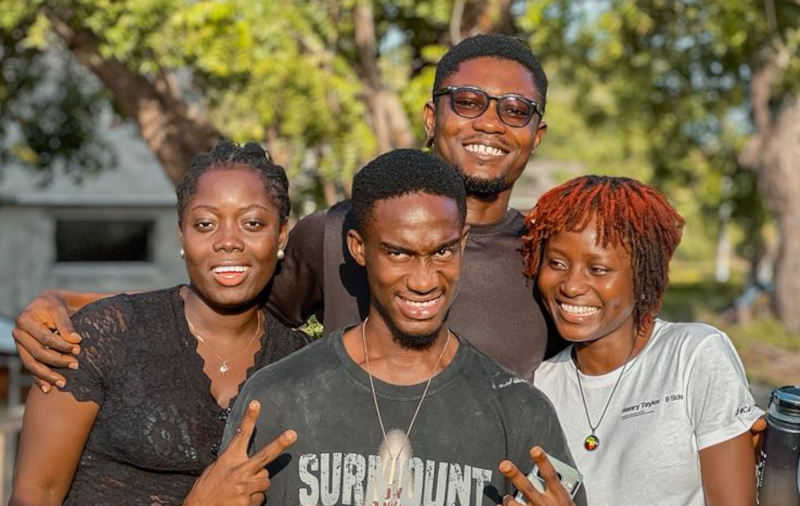
"This workshop was not an imported methodology. It was a collaboration. The Sankofa framework, the Adinkra symbols, and the Nnoboa principle of carrying together are not new to Ghana. What the New Futures team offered was a way to activate them for the specific pressures of our time: ecological collapse, political fragility, and the exhaustion of old stories. The students taught us as much as we taught them."
Ebenezer Kow Abraham moved through De/composing with quiet attentiveness, grounding the work between international facilitators and Ghanaian student participants, translating not only language but sensibility. He said, “Sankofa is not a metaphor to be explained but a movement to be inhabited, and that to organise is not to control but to make room for what wants to emerge”.
The University of Education, Winneba, and CERCCA express their sincere gratitude to everyone who contributed. They thank the New Futures Arts Collaborative for their generosity and dedication; Dr David Anderson Hooker for sharing his insights on narrative change; all UEW organisers and student participants; the Department of Art Education for hosting both the workshop and the exhibition; and CERCCA for organising the Sankofaism conference and promoting this exchange.
Lukas Sterzenbach in collaboration with Isadora Canela & Elsa Cuissard
New Futures Arts Collaborative