Selassie Nkrumah Nyamekye: Decomposition - A Workshop on Decay, Narratives, and Embodied Practice
This artistic report documents my participation in Decomposition, a two-day international workshop that brought together artists and facilitators from multiple cultural contexts to explore “decay” not as an endpoint but as a generative, slow, and natural process. Through a sequence of participatory activities, including a burning ritual with a single divided cloth directed by Kirimi Thuranira, narrative deconstruction led by Dr. David Hooker, embodied performance of the Adinkra symbol Nykimkyim guided by Ngugi Waweru from Kenya, personal symbol creation facilitated by Agnes Mensah Onumah from Ghana, and game-making with found objects led by Lukas Sterzenbach from Germany, the workshop systematically challenged dominant cultural narratives surrounding loss, crisis, and adulthood. Each session was followed by structured reflection, grounding theory in lived experience. The workshop culminated in a final exhibition for which each artist produced an original work. As a hyperrealistic pencil artist and self-identified perfectionist, I used this opportunity to abandon medium-specific constraints, creating a mixed-media piece featuring a personal symbol, vibrant oil pastel fire, pin-etched words ("decompose", "decomposition" and "compose"), and paper burnt along all edges (see fig. 2). The report argues that decomposition, when reframed through ritual, embodiment, play, and symbolic invention, becomes not an absence of meaning but a method of making it. For the artist, letting go of perfectionism proved to be not a loss of control but an entry into deeper creative freedom.
INTRODUCTION
The workshop titled Decomposition was a curated participatory experience requiring a formal application process. It brought together artists, community practitioners, and facilitators from multiple cultural contexts to interrogate a central, often avoided theme: decay. Rather than framing decay as mere loss or ending, the workshop positioned it as a generative force, a slow, natural process through which meaning can emerge. This report documents the activities, reflections, and personal artistic transformation experienced during the workshop, culminating in an exhibition of works that translated these collective explorations into material form.
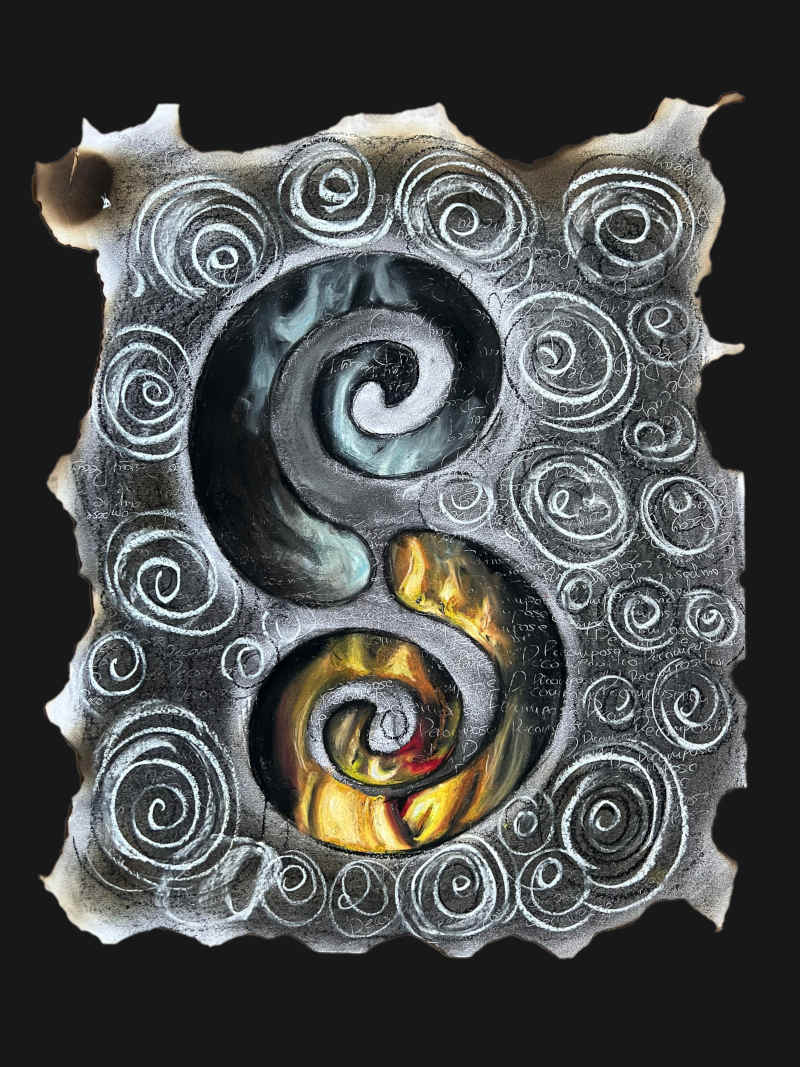
Fig. 2: The Author's Work
DAY ONE: RITUAL, NARRATIVE, AND EMBODIED KNOWING
CIRCLE OF PRESENCE: INTRODUCTIONS
The workshop commenced with a circular seating arrangement, a deliberate spatial choice that eliminated hierarchy and fostered collective attention. Each participant introduced themselves by name and creative practice. This simple act established the first narrative: that every person entering the space brought a unique lens through which decay would be reframed.
THE BURNING RITUAL: RELEASING WHILE RETAINING
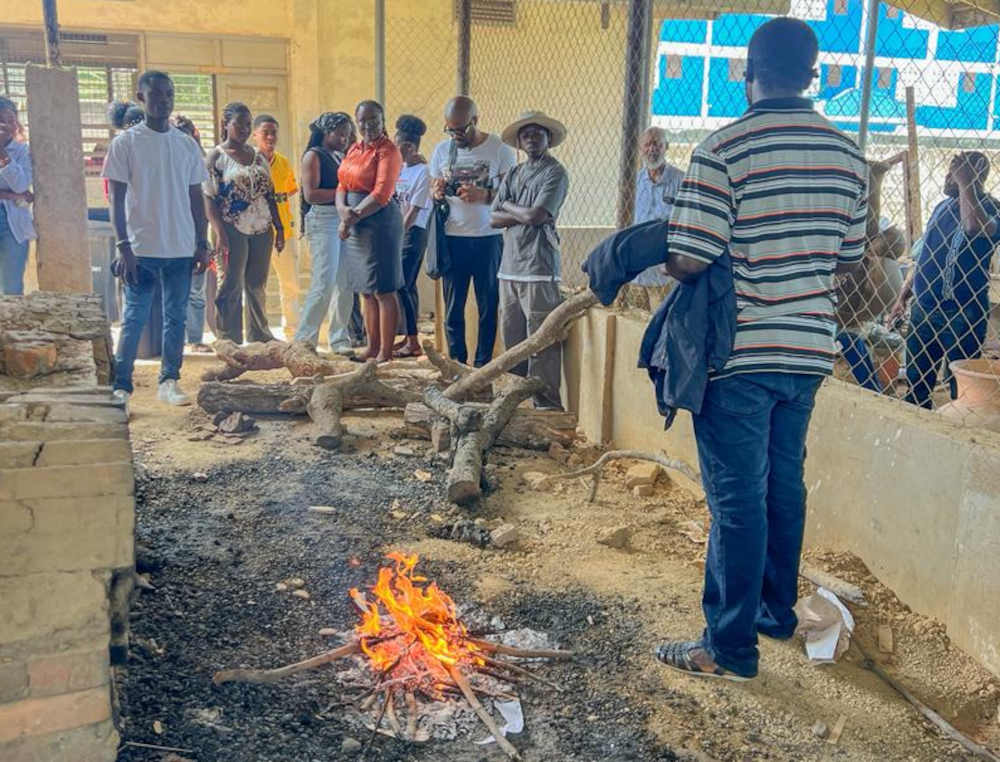
Fig. 3: The Burning Ritual
For the next step, participants had been instructed to bring a single cloth, one that carried personal history, intended for disposal and meant to symbolize decay. A bonfire was set at the center. Standing in a circle, each person divided their cloth into portions and burned part of it in the fire.
What unfolded was unexpected. As the flames consumed the fabric, participants realized that the same cloth held both painful and joyful memories. The ritual was therefore not an act of erasure but of discernment: the negative experiences and heavy emotions were symbolically burned away, while the good memories were consciously held onto. Fire became a medium of transformation, not destruction for its own sake, but a ceremonial separation of weight from wisdom. By burning only a portion of the cloth, participants acknowledged that decay need not be total; what remains still carries meaning.
CRISIS, NARRATIVE, AND THE ARTIST'S ROLE
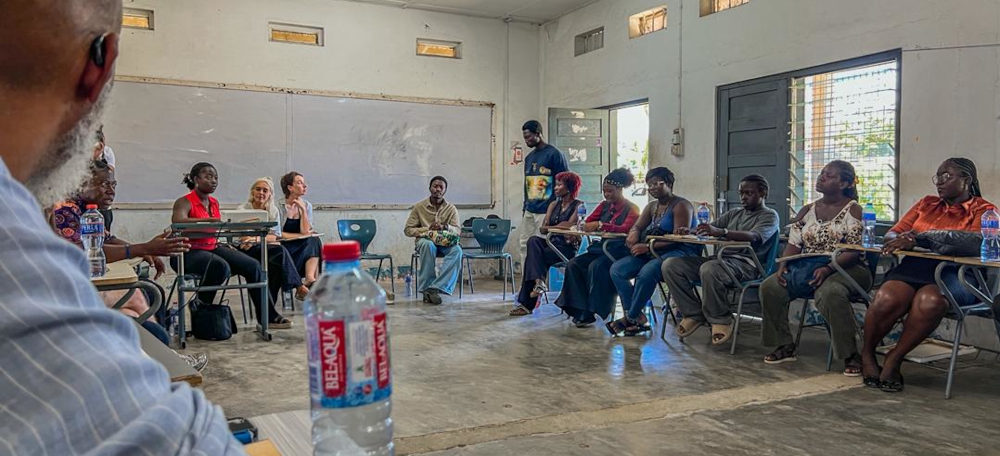
Fig. 4: Theory Session
Dr. David Hooker, a specialist in community rebuilding and post-crisis intervention, facilitated a discussion on two interconnected concepts: crisis and narrative. He guided participants to understand that narratives are not fixed truths but constructions that gain validity only when an individual or community "builds their light around them." In other words, a narrative becomes right or true through the meaning we actively invest in it.
For artists, this carried a profound implication. Dr. David argued that our role in society is to help people accept decay as part of a greater good. He asserted that from every decaying situation, something meaningful is in the process of emerging. The artist, therefore, becomes a meaning-maker, one who assists others in locating hope within disintegration. This session reframed artistic practice as a form of communal healing labor.
EMBODYING ART, BECOMING ONE
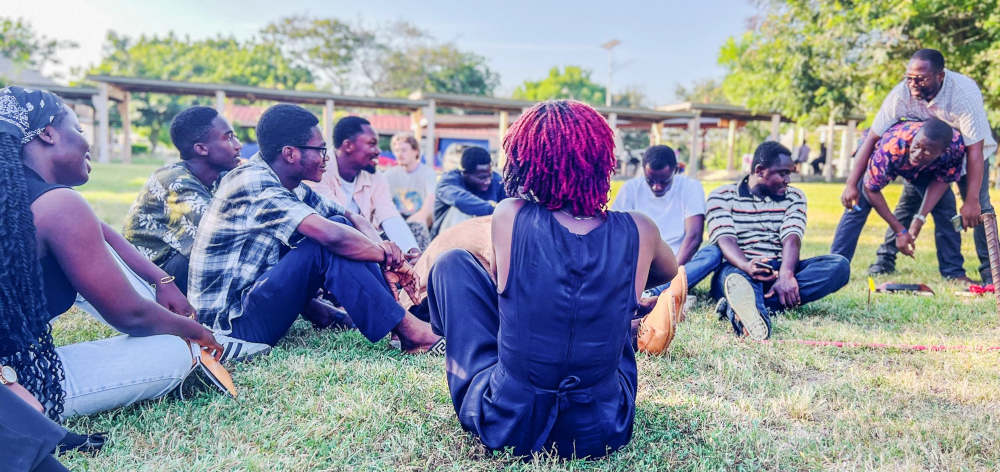
Fig. 5: The Outdoor Performance
Ngugi Waweru from Kenya posed a deceptively simple question: Are art and the artist two separate entities, or can the artist embody their art to become one with it? This question directly addressed the theme of shifting narratives. If we wish to change how society views decay, we must first embody that new narrative.
Then, participants engaged in an outdoor performance exercise based on the Adinkra symbol “Nkyimkyim”, which signifies twisting, turning, and initiative. Through free, twisting bodily movements, each person physically enacted the symbol's meaning. The collective conclusion was striking: decay, though often painful, is not chaotic. It is slow. It is calm. It is natural. This embodied realization contradicted the modern anxiety that decay equals emergency. Instead, the body learned to move with decay's rhythm, not against it.
After every session, participants paused for structured reflection, articulating how each activity felt and what personal experiences surfaced. This rhythm of action followed by reflection ensured that the workshop remained grounded in lived experience rather than abstract theory.
DAY TWO: SYMBOL CREATION AND PLAY
FORGING PERSONAL ICONOGRAPHY
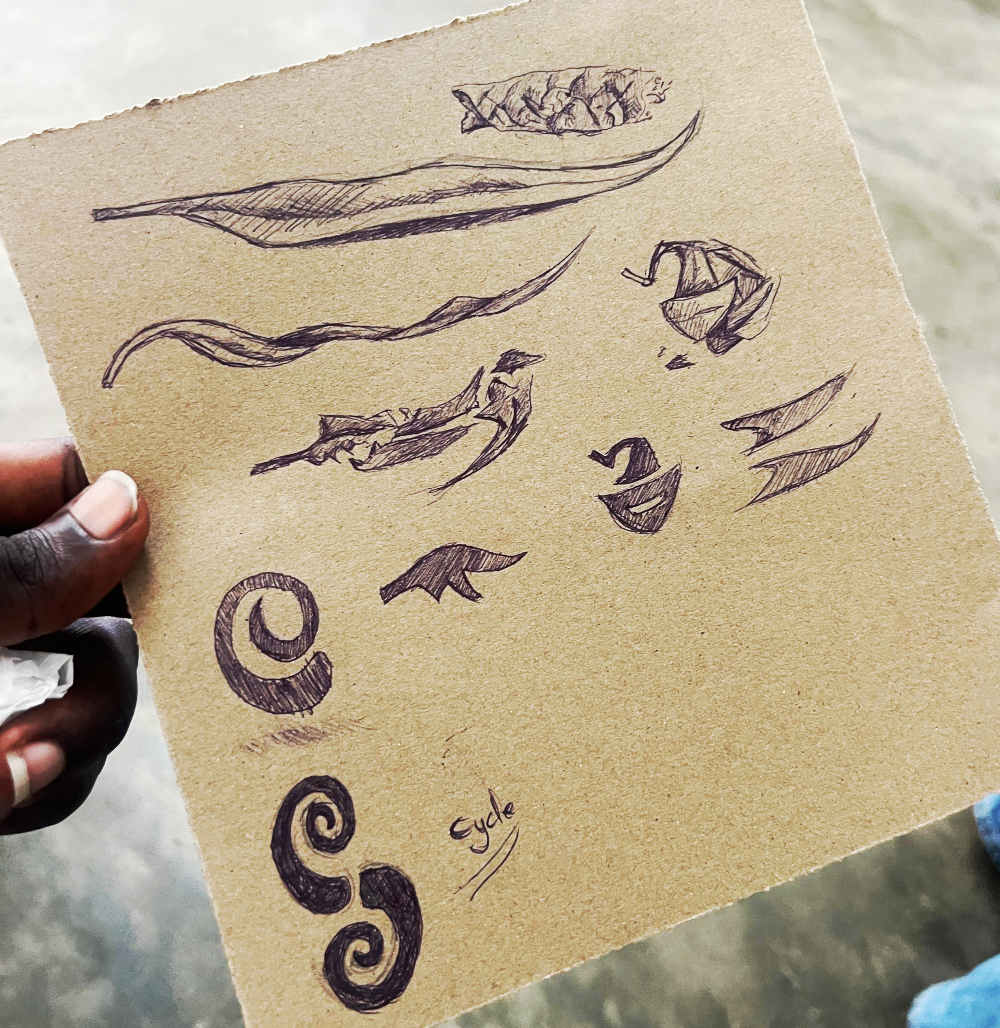
Fig. 6: Creating Symbols
Agnes Onuma led an exercise in symbolic invention. Each participant was instructed to find any object, no matter how mundane, and draw inspiration from it to create an original iconic symbol. The symbol was then named by its creator, who explained its personal influences and meaning.
This act of naming and symbol-making transformed random observation into intentional visual language. After completing their symbols, participants passed their drawings around the circle for collective viewing. The exchange generated a quiet museum of intimate iconographies, each symbol carrying a unique relationship to decay, memory, or transformation.
THE GAME AS ANTI-NARRATIVE
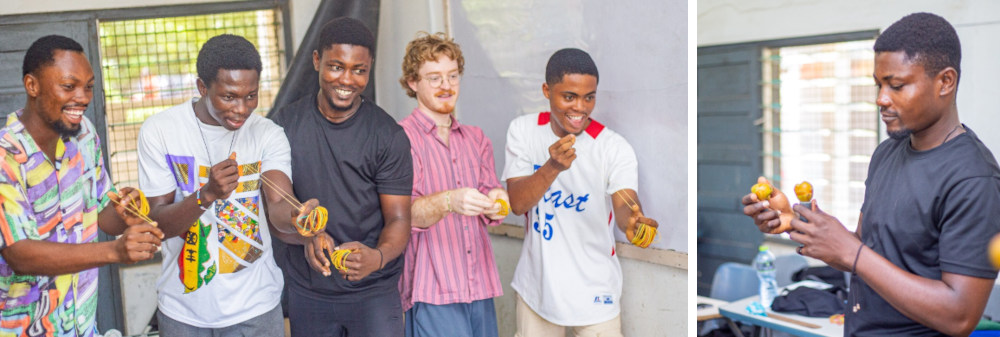
Fig. 7: Inventing Games
Lukas introduced an unexpected challenge: create a game using only found objects such as broken tiles, coconut pods, bottle tops, and other discarded materials. Before designing their own games, participants first explored and played several native Ghanaian games, a joyful reminder of childhood pastimes.
This session directly confronted a silent cultural narrative: that adults must remain perpetually busy and cannot engage in play. Lukas asked, Who decided that? By the end of the session, the group had not only invented new games with written rules but had also spontaneously erupted into dancing and drumming. This unplanned moment of collective joy was not a distraction from the workshop's theme but its fullest expression, play as a form of decomposition, breaking down the rigid adult identity into something more fluid and alive.
FINAL EXHIBITION: TRANSLATING EXPERIENCE INTO ART
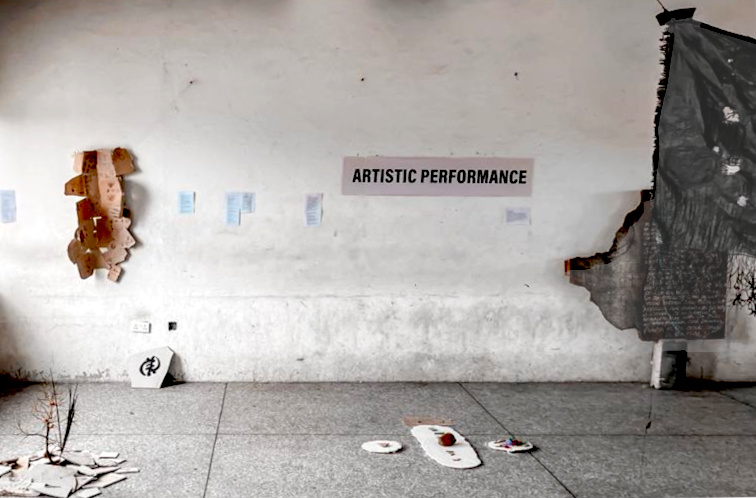
Fig. 8: Final Exhibition
The workshop concluded with a required artistic production: each participant created an original artwork synthesizing the two days of experiences. These works were exhibited, and the exhibition became an extension of the workshop itself, a space for artists to connect with audiences and narrate the processes behind their pieces.
PERSONAL ARTISTIC STATEMENT: LETTING GO OF PERFECTION
As a hyperrealistic pencil artist with a strong perfectionist tendency, I typically restrict myself to a single medium, refining it toward near-photographic precision. For this workshop, however, I made a deliberate decision to abandon my mental constraints. I sought freedom, not only in medium but also in subject matter.
The resulting work is a mixed-media piece. At its center is the personal symbol I generated during Agnes's session. Within that motif, a vibrant fire emerges, rendered in bold oil pastels. Across the raw paper background, the words decay and deteriorating are etched with a pin, subtle, tactile scars that speak before they are read. Finally, the entire paper is burnt along its edges, not as decoration but as an integral element signifying decomposition.
This piece does not attempt hyperrealism. Instead, it performs decay. The burnt edges continue to crumble. The etched words catch light unevenly. The fire does not consume but coexists. In letting go of control over medium and outcome, I discovered that decomposition is not the opposite of artmaking, it is a method of it.
CONCLUSION
The Decomposition workshop reframed decay from an endpoint into a process, slow, natural, and meaningful. Through burning rituals, narrative deconstruction, embodied symbol performance, play, and personal symbol creation, participants were guided to shift their relationship with loss and transformation. This workshop became a permission slip to abandon perfectionism and embrace the generative power of letting go. The final exhibition was not a showcase of finished products but a testimony to the beauty of work that is still, in some sense, decomposition.