De( )composing: Between Extraction and Regeneration.
Fourteen international artists come together in Hout Bay for the culminating exhibition of the New Futures Arts Collaborative residency, in cooperation with EVC and hosted by ART AFRICA.
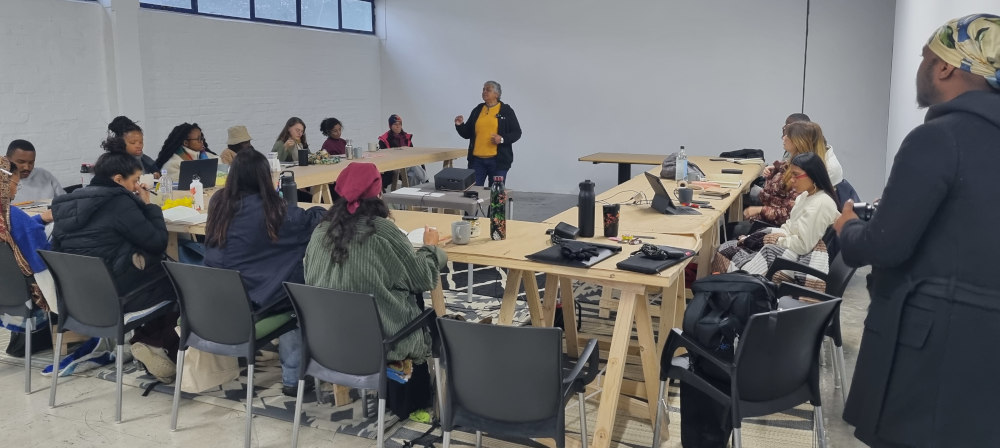
For weeks, Hout Bay near Cape Town, South Africa, has become a temporary base for a group of artists, researchers and cultural practitioners brought together through the second New Futures Arts Collaborative residency in cooperation with EVC and hosted by ART AFRICA. Following an initial research phase, based on input by Avi Sooful, David Hooker, and Ernst Wagner, participants arrived in Cape Town for an intensive programme of studio work, discussion, field research and encounters with the cultural and environmental histories of the Western Cape.
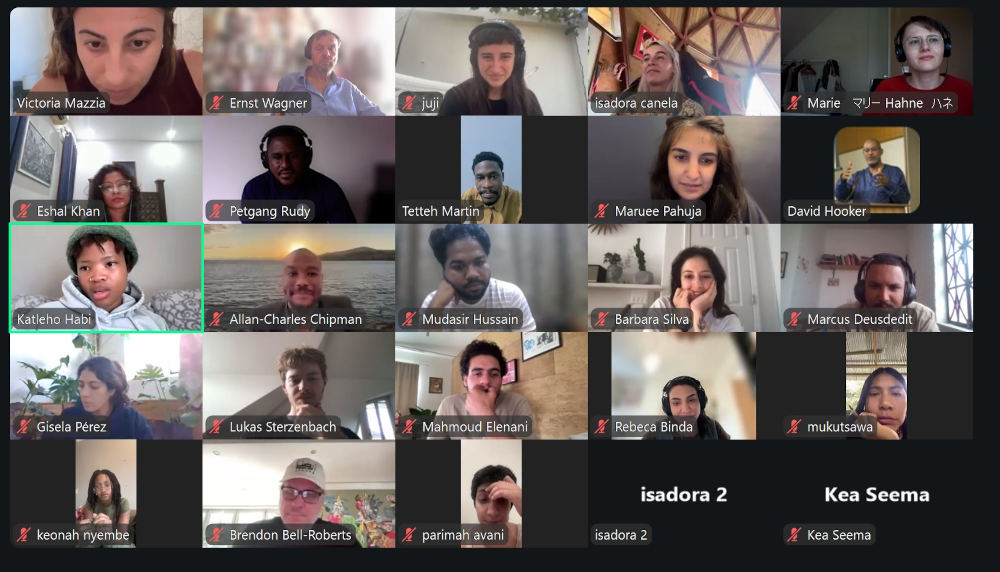
The residency culminates in De()composing: Between Extraction and Regeneration, an exhibition curated by Brazilian artist and researcher Isadora Canela, with assistance from Juji. Bringing together 14 artists from Brazil, Pakistan, Ghana, Cameroon, Germany, Egypt and South Africa, the exhibition considers what artistic practice can make visible at a moment shaped by ecological pressure, social fracture and competing ideas of repair.
Participating artists are Marcus Deusdedit, Mudasir Chandio, Tetteh Narh Martin, Keabetswe Seema, Katleho Habi, Rebeca Binda, Pina Scantamburlo, Mukutsawa Montahuano Ushigua, Keonah Nyembe, Gisela Pérez, Marie Hahne, Nghepkam Petgang, Eshal Hassan Khan and Mahmoud Elenani.
The project centres on decomposition, approached less as a metaphor for collapse than as a transitional condition. Extraction, regeneration and decomposition form a conceptual continuum: resources, bodies, knowledge and cultures are considered in relation to systems of consumption, while regeneration asks what forms of life and relation might become possible after depletion or rupture. Between these states, decomposition becomes a space in which established structures can be unsettled and reconsidered.
Canela’s curatorial framework draws on mycelial ecologies and their decentralised networks of exchange and interdependence. Rather than treating the participating artists or their research as discrete positions, the exhibition proposes them as interconnected points within a broader ecology of ideas. This is particularly relevant to a residency in which artistic production developed alongside encounters with landscapes, archives, institutions and communities rather than exclusively within the studio.
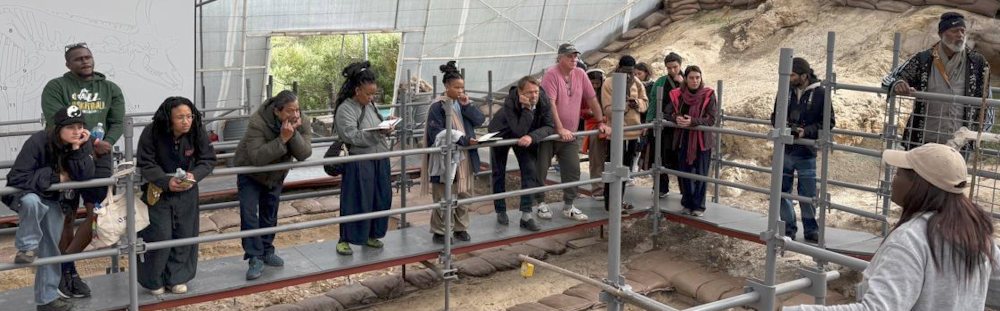
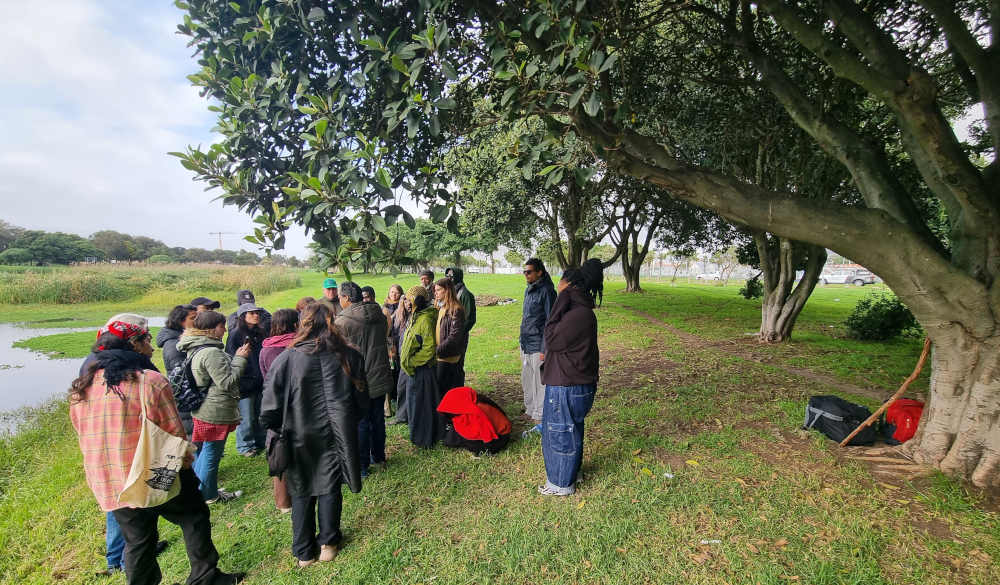
Hout Bay and the wider Western Cape consequently function as more than a setting for the programme. Visits to museums, monuments, cultural institutions and environmental sites introduced participants to histories of land, displacement, extraction and resistance. Particular attention focused on the continuing histories and knowledge of Khoi and San First Peoples, including encounters within the Hangberg community and a three-day research journey along the West Coast. These experiences established a local context through which the residency’s larger questions around memory, ecology and regeneration could be tested rather than considered only in the abstract.
The individual practices brought into this framework vary considerably. Mudasir Chandio examines architecture, construction and urban transformation; Tetteh Narh Martin works with discarded materials and questions of environmental sustainability; Keabetswe Seema brings together Black feminist thought, Afro-surrealism and personal and archival narratives; while Eshal Hassan Khan considers the disappearance and transformation of minority architectural heritage in Pakistan. Other participants approach environmental justice, Indigenous knowledge, sound, performance, journalism, collective memory and socially engaged practice from different geographic and disciplinary positions. What connects these practices is therefore not a single aesthetic or political position, but an interest in what happens when existing structures are subjected to pressure. De()composing asks whether breakdown can also create the conditions for another kind of formation, and whether artistic practice can provide a space in which uncertainty is inhabited rather than resolved.
https://newfuturesartscollaborative.online/3/
The New Futures Arts Collaborative is a programme of Initiatives of Change USA, developed in partnership with Collective WEBS, Exploring Visual Cultures Project and ART AFRICA. Together, the partners bring different approaches to artistic research, ecological thinking, education, cultural exchange and the role of art in questioning inherited social and political structures.
De()composing: Between Extraction and Regeneration opened on 4 August 2026 at 18:00 at 31 Harbour Road, Hout Bay, Cape Town, above the Bay Harbour Market
Brendon Bell-Roberts / Art Africa Magazine