
By Avi Sooful, University of Pretoria
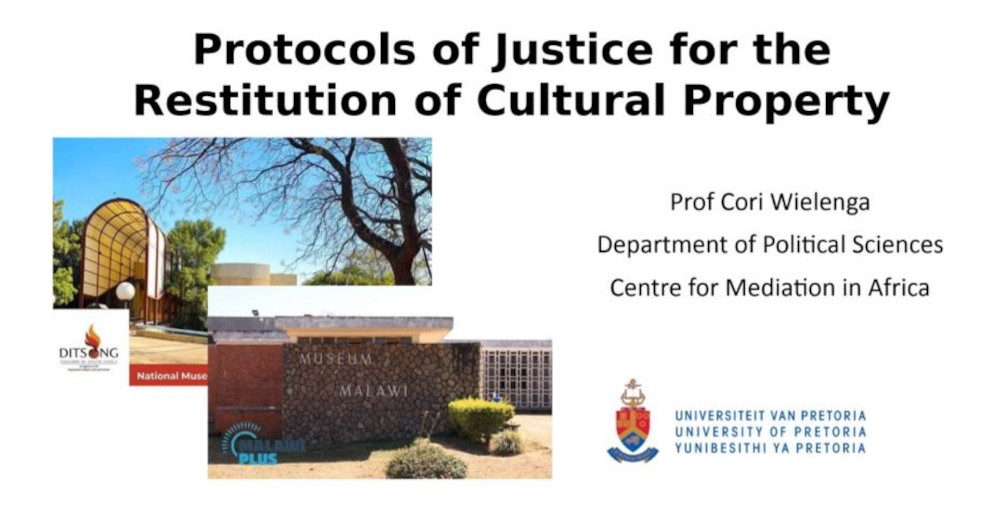
The University of Pretoria (UP), in collaboration with UNESCO and AUDA-NEPAD, is developing restitution programmes; once approved, the University will offer them. The programmes will be transdisciplinary, community-centred, with a legal and humanities focus.
The need to consider this bold move addresses the role of higher education in restitution matters and the educational urgency in enabling African communities to ‘manage’ their heritage. In anticipation of these programmes, a regional conference, Mazibuyele eAfrica: Reclaiming Our Heritage, was hosted in Sandton from 19-23 January 2025. In attendance were delegates from UP, UNESCO, AUDA-NEPAD, the Department of Sports, Arts & Culture (DSAC), the Minister of Tourism, Sports, Arts & Culture (Lesotho), ICOM Vice President (Zimbabwe), Afrimuhere, South African Open Restitution Africa, National Museums (Eswatini, Namibia, Mozambique, Botswana, Zambia, Lesotho, Malawi), Arterial Network ( Zimbabwe), ICOM Africa President (Burkina Faso), Conservators, Academics (Stellenbosch, Mpumalanga, Botswana) and Independent consultants (Botswana, South Africa).
The conference discussions concentrated on legal frameworks that limit African restitution requests, porous policy frameworks, heritage spaces and the paucity of conservation, preservation skills and provenance research on cultural property from Africa that are held in foreign art institutions.
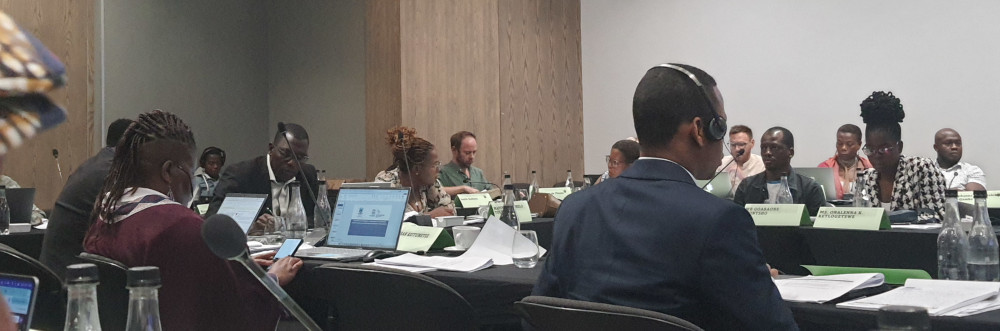
A curriculum team was tasked to begin with the development of educational programmes that could assist Africa on restitution matters. A group of experts and academics convened at the AUDA-NEPAD Headquarters in Midrand, South Africa, from 24–28 March 2025. The primary objective of this task team was to develop a comprehensive curriculum for a transdisciplinary higher education programme on the return and restitution of cultural property in Southern Africa.
The following key issues were highlighted:
- The African Union Model Law on the Protection of Cultural Property and Heritage must play a central role in curriculum discussions to ensure that heritage and restitution efforts are framed within a strong African legal and policy context.
- The political will of African Member States to support restitution initiatives.
- A focus on re-establishing agency and equity in how Africa’s history and cultural assets are understood, represented, and preserved.
- The developed curriculum should therefore prioritise research that is led by African institutions and scholars to ensure that knowledge production is centred on the continent.
- It is important to maintain a balance between research and practical application, ensuring that graduates within the curriculum are well-equipped to tackle real-life challenges.
- The curriculum should also integrate Indigenous Knowledge Systems with Western conservation methods, ensuring a balanced and ethical approach to artefact preservation.
- Restitution should be community-centred, ensuring that the return of cultural property fosters a sense of ownership and justice. Community engagement in this regard is key to ensuring that restitution efforts reflect the values and traditions of the people they impact.
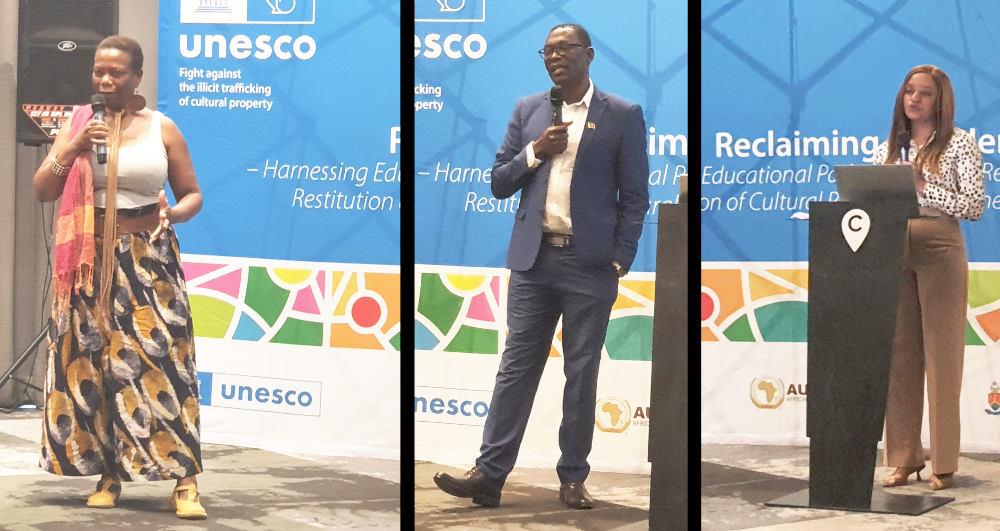
Sibongile Masuku - Chair of Culture (National Commission for UNESCO). Terry Nyame-Vice President (ICOM). Daphine Muzawazi-AUDA NEPAD
It was mooted that two non-credit-bearing courses be offered by the University of Pretoria through Enterprises. This would test the appetite for restitution programmes. In response, two non-credit-bearing certificates were offered by the University of Pretoria, online: Protocols of Justice and Integrated Indigenous Conservation Techniques and were facilitated by Prof Cori Wielenga and Ms Jabu Ntuli, respectively. The programmes were held from 11- 28 August 2026, and 27 participants from nine countries (Botswana, Eswatini, Lesotho, Malawi, Mozambique, Namibia, South Africa, Zambia and Zimbabwe) enrolled.
The 27 enrolled participants were nominated from various art sectors to reflect a diverse classroom mix. The challenge of online teaching is limited hands-on access to practical skills compared with face-to-face engagement. To support the skills offered in the Integrated Indigenous Conservation Techniques, participants received a toolkit couriered to them.
The intention of these two non-credit-bearing certificates was twofold: to understand how Africa is dealing with the realities of cultural property conservation and, secondly, how we address the legal implications of restitution given the legal frameworks available. The discussions held in the virtual classroom provided a deeper understanding of the gaps that exist currently and provided opportunities for addressing them.
The impact of these two educational offerings reached nine countries and provided insight into the enormous workload that exists in addressing both restitution of cultural property and the current human resource skills challenges in the museum sectors. The depth and quality of discussion throughout the training demonstrated not only a strong level of interest, but also the considerable expertise present in the room. Participants actively drew on their own professional experiences, contributing diverse perspectives and practical insights that enriched the collective learning process. This level of engagement created a dynamic exchange between theory and practice, allowing the training to move beyond the transmission of knowledge towards a more collaborative exploration of how principles of justice and integrated conservation can be meaningfully applied within contemporary cultural heritage contexts.