
EXPLORING HISTORY, CULTURAL LEGACY AND EMOTIONS THROUGH DRAWING
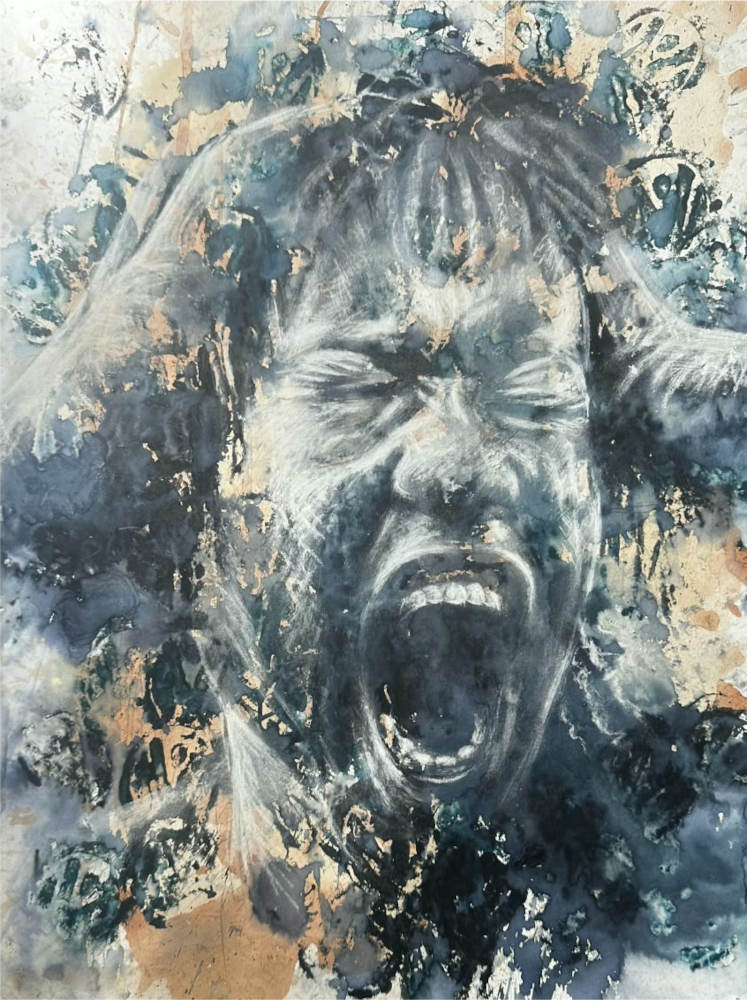
Esther Obenewaa Ansah: The Marks of Memory, 2026
The Context
Art powerfully expresses human realities, emotions, and cultural values. Through materials, images, and symbols, artists can tell stories that encourage people to reflect on the past and its influence on the present. Esther Obenewaa Ansah developed the Mark of Memory drawing series in Ebenezer Kow Abraham’s Independent Studies in Drawing class at the Art Department, University of Education, Winneba. The series explores the effects of the Atlantic slave trade and colonialism on Africans, focusing on historical suffering, cultural identity, and the survival of African knowledge and traditions.
Materials as a Representation of Historical Memory
One of the most interesting features of The Mark of Memory is the artist's use of natural materials to prepare the drawing surfaces. Instead of using plain white paper, which is the most common drawing surface, the artist stains the paper with boiled hibiscus flowers and dried onion peels. This creates different colours, textures, and patterns that become part of the finished artwork. The stained paper carries meaning beyond its appearance. It can be understood as a symbol of the lasting effects of slavery and colonialism. Just as the dyes leave marks on the paper, historical violence left lasting effects on African people and their communities.
The artist embraces the dyeing process's unpredictable results, letting some areas of the paper darken while others remain lighter and creating irregular patterns and textures. Rather than treating these variations as mistakes, the artist incorporates them into the artwork, demonstrating how unexpected results can contribute to artistic expression. Colour, texture, and facial expression also play important roles in communicating emotion. The distressed figure, dark background, and contrasting light marks create a sense of tension and pain that cause viewers to meditate on the human suffering associated with slavery.
Branding Marks and Adinkra Symbols: Violence and Cultural Identity
Another important idea in The Mark of Memory is the contrast between branding marks and Adinkra symbols. During slavery, some enslavers used hot irons to brand enslaved Africans as a form of identification and ownership. These marks represent the violence, humiliation, and loss of freedom experienced by enslaved people. In contrast, Adinkra symbols communicate ideas and values within Ghanaian cultural traditions. They are not simply decorative designs; they carry meanings connected to wisdom, identity, and social life. Three symbols are particularly relevant to the article: Sankofa, which encourages people to learn from the past; Aya, which represents endurance and resourcefulness; and Mpatapo, which is associated with reconciliation and peacemaking.
The contrast between these two forms of marking is significant. Branding marks impose identity through violence, while Adinkra symbols communicate cultural knowledge and values preserved through tradition. Their comparison encourages viewers to recognise that although slavery and colonialism caused great harm, they did not erase African cultural identity.
Educational Significance
Beyond its artistic value, The Mark of Memory demonstrates how art can help students understand African history and culture. The Akan proverb “Nea onnim no sua a, ohu,” meaning “He who does not know can know by learning,” reinforces the significance of seeking knowledge and learning from the past. In this way, the artwork encourages students to look beyond limited views of African art and recognise its cultural as well as intellectual significance. By studying African symbols, artistic traditions, and historical experiences, students can develop a deeper appreciation of their heritage while also learning to question assumptions that place Western artistic traditions above African ones.
By using hibiscus flowers and dried onion peels, the artist also shows that local materials can be useful in art production. Students can experiment with such materials to explore colour, texture, and other artistic effects, especially when access to expensive art supplies is limited. Students are also encouraged to investigate their history, appreciate indigenous knowledge, and explore different ways to express ideas through art.
Conclusion
The Mark of Memory shows how drawing can communicate powerful ideas about history, suffering, cultural identity, and emotions. Through stained paper, expressive figures, and Adinkra symbols, the artist explores the lasting effects of slavery and colonialism while drawing attention to the continued importance of African cultural knowledge.
The work also shows that artistic materials can carry meaning beyond their practical use: the stained surfaces evoke historical memory, while the symbols prompt reflection on cultural identity as well as the importance of learning from the past. By connecting art with history, philosophy, and practical experimentation, The Mark of Memory spotlights the educational value of artistic expression. Ultimately, the series reminds us that understanding the past is essential to understanding the present. It encourages viewers and students to engage with African history, appreciate their cultural heritage, and recognise art as a meaningful means of preserving and communicating knowledge.
16th October 2026