
MORE THAN A FACE: The Cultural Meaning and Significance of Masks
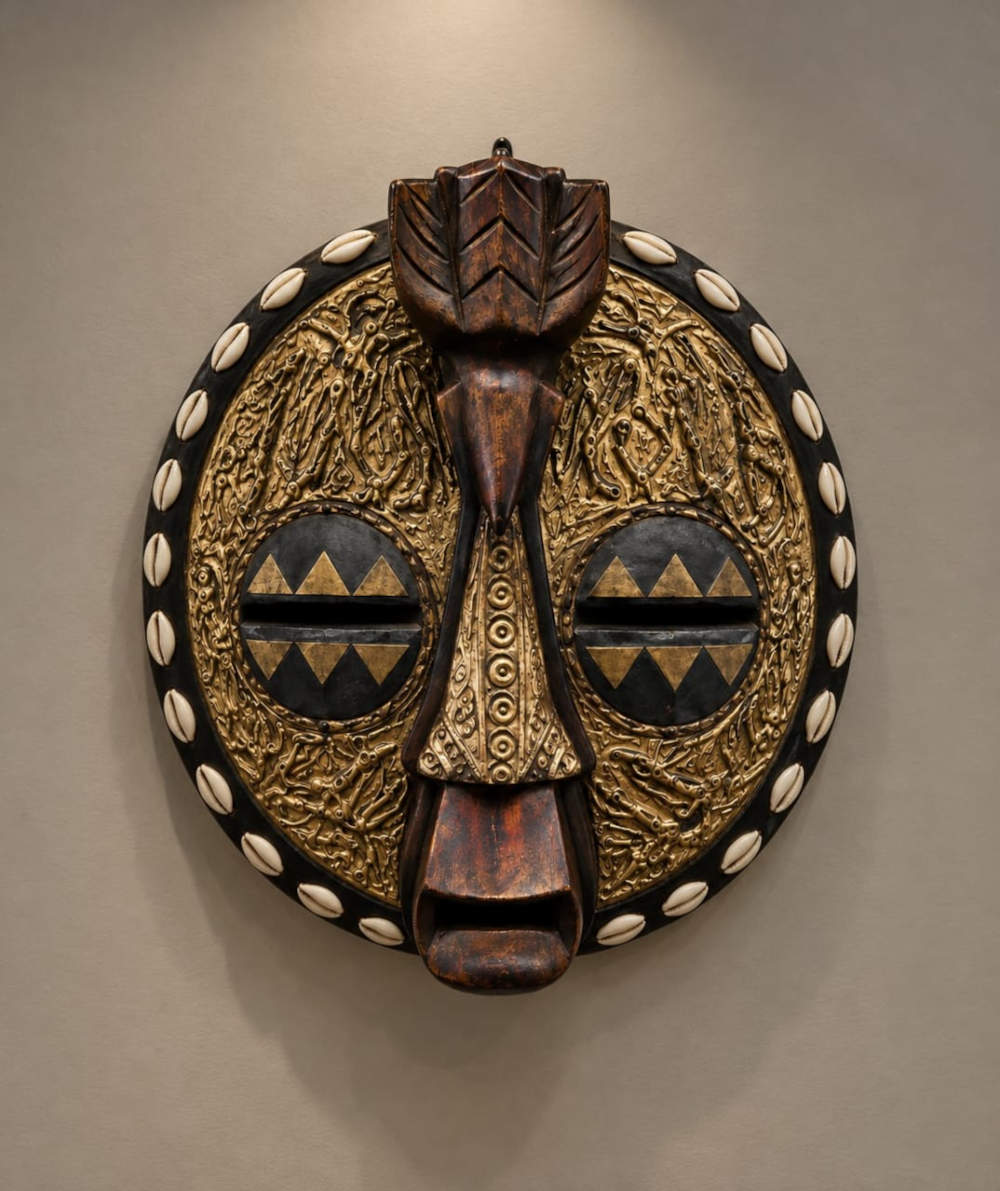
Unknown artist (Mask), National Museum of Ghana. Photo Credit: Ebenezer Kow Abraham
Introduction
Imagine attending a traditional ceremony and seeing a figure emerge, its face hidden behind an intricately designed mask. Accompanied by music, drumming, and dance, the figure moves before an audience. However, to the people watching, the performance may represent far more than entertainment. The masked figure honours ancestors, represents a spiritual presence, communicates a community’s beliefs, or reminds people of traditions passed down through generations. In such settings, a mask is not simply an object worn over the face; it can become a powerful means of expressing cultural identity and connecting people with their history.
Across different African societies, masks have played important roles in religious ceremonies, community celebrations, storytelling, and traditional performances. Their meanings vary from one culture to another, but they often communicate ideas and beliefs that are central to the lives of the people who use them. The Smithsonian’s National Museum of African Art (n.d.-a) explains that African masquerades can serve religious, social, educational, and ceremonial purposes, showing that masks matter not only for their appearance but also for their roles in community life.
MASKS AND THE WORLD OF THE ANCESTORS
In many African societies, the relationship between the living and the dead expands beyond remembering those who have passed away. Ancestors may be regarded as important members of the wider community whose influence continues after death. People remember them through traditions, ceremonies, stories, and practices that maintain connections between generations.
Within certain cultural traditions, masks play an important role in expressing these relationships. During particular ceremonies, a masked performer may represent an ancestral or spiritual presence, allowing the community to acknowledge relationships that extend beyond the visible world. Some masquerades also honour the dead, preserve historical knowledge, and communicate values that are important to the community (National Museum of African Art, n.d.-a).
Consider the Egungun tradition among Nigeria's Yoruba people. Egungun masquerades are associated with ancestors' spiritual power and the continuing relationship between the living and the departed. Through elaborate costumes, masks, music, and dance, performers participate in ceremonies that honour ancestors and maintain family and community traditions. According to the National Museum of African Art (n.d.-a), Egungun refers both to the concealed nature of the masked dance and to the spiritual power of the ancestors it honours.
This example reveals an important aspect of masks: their significance may lie not only in what they look like, but also in what they represent and what happens when they are used. However, not every African mask represents an ancestor, and not every masking tradition serves ancestral worship. Some masks are associated with spirits, initiation ceremonies, social responsibilities, entertainment, or the teaching of community values. Their meanings depend on the particular cultural traditions in which they are used (Clarke & Arkenberg, 2006).
CONCEALING IDENTITY AND BECOMING SOMEONE ELSE
One fascinating aspect of masks is their ability to conceal the wearer’s ordinary identity. When a person puts on a mask or a complete masquerade costume, their familiar appearance may become hidden, making it difficult for an audience to recognise them. However, this concealment can mean much more than simply covering the face. In certain traditional performances, hiding the wearer’s identity shifts attention from the individual to the character, role, or spiritual presence being represented. The performer may no longer be regarded simply as an ordinary member of the community but as someone participating in a recognised cultural tradition or representing a spiritual presence.
The Yoruba Egungun tradition offers an example. The Smithsonian’s National Museum of African Art (n.d-b) explains that the dancer’s body remains concealed beneath the elaborate costume, even during energetic movement. This concealment is part of the performance and connects to the tradition's ancestral significance. Concealing identity can therefore distinguish who a person ordinarily is from the role they perform during a ceremony. The mask and costume may shift attention from the individual’s personal identity to the performance's cultural or spiritual meaning.
In some traditions, the performer's identity is also kept secret or restricted to certain people. Such practices may form part of the tradition’s social or religious significance. However, the reasons for concealing identity differ between communities, and assuming every mask serves the same purpose would be misleading. Masks show how covering the face can change how a person is perceived and how others understand their role. Through this information, the wearer may become a recognisable character within a community’s cultural world.
WHEN A MASK BECOMES MORE THAN AN OBJECT
One of the most fascinating things about traditional masking is the transformation that can occur during a performance. A person who puts on a mask may take on a role different from their ordinary social identity. Through costume, movement, music, and dance, the performer becomes part of a larger cultural expression. Clarke and Arkenberg (2006) discuss African art within the social, religious, and cultural settings in which it is created and used. This perspective helps us understand why we cannot always separate a mask from its performance. Its significance may depend on the occasion, the person wearing it, the accompanying music and dance, and the community's beliefs.
A mask may be carefully crafted, but its cultural role extends beyond its physical appearance. In some traditions, it represents an ancestral or spiritual presence. In others, it identifies a particular character or communicates recognised values. The significance comes from the relationship between the object, the performer, and the community that understands its meaning. The Smithsonian’s National Museum of African Art (n.d.-a) notes that a mask may be recognised through its dance style, accompanying music, and accessories rather than its facial features alone. This suggests that the mask’s identity and meaning may emerge from the performance as a whole.
A mask can therefore be appreciated as a work of art while also being understood as part of a larger cultural practice. Its shape, patterns, materials, and craftsmanship contribute to its appearance, but its purpose and meaning may be revealed more fully through the traditions in which it is used.
MASKS AS KEEPERS OF CULTURAL IDENTITY
Masks also help communities preserve and communicate their cultural identities. Through their designs, performances, and associated stories, they can carry knowledge from one generation to another. The National Museum of African Art (n.d.-a) explains that some masquerades teach history and moral lessons, mark transitions from youth to adulthood, and encourage community participation. In these contexts, a masked performance becomes a form of education. Instead of learning only through spoken explanations, community members experience cultural knowledge through movement, music, storytelling, and shared participation.
For younger generations, such performances may offer opportunities to learn about customs, responsibilities, values and collective history. For older generations, they provide ways to maintain traditions and pass on knowledge. Masks may also express ideas about authority and social order. Certain masquerades are associated with recognised institutions or groups and may participate in ceremonies that affirm social responsibilities. Others communicate ideas about desirable behaviour or the consequences of violating community expectations (Clark & Arkenberg, 2006). Through these different roles, masks can strengthen a community’s sense of belonging. They remind people of shared histories, reinforce cultural values, and give community members opportunities to participate in traditions that distinguish them from others. Their significance lies partly in their ability to bring cultural knowledge into a shared, visible experience.
APPRECIATING THE MASK’S ARTISTIC FEATURES
The mask under discussion has a distinctive appearance. A patterned border surrounds its rounded face, while its eyes, elongated nose, protruding mouth, and raised forehead design give it a striking character. Intricate markings cover much of the face, contrasting its textured surface with the darker geometric forms around the eyes.
The mask was carved and modelled to create its facial features. The artist used surface decoration to create intricate patterns and raised details. Assemblage attached cowrie shells and other decorative elements. Colouring, patination and finishing enhanced the texture, contrast and overall appearance. Wood is used in many African masking traditions, although masks can also be made from cloth, fibre, leaves, and other materials. The Smithsonian’s National Museum of African Art (n.d.-a) describes this diversity of materials and forms, showing that African masks are not limited to a single method of construction.
The mask’s carved features and patterns invite us to consider the relationship between artistic design and cultural meaning. In many masking traditions, facial features, colours, patterns, and decorative elements may communicate particular ideas or identify a character or cultural group. However, their meanings are not universal. A pattern that carries particular significance in one community may mean something different in another. Understanding a mask, therefore, involves appreciating both its visual qualities and the cultural knowledge associated with its design. Its appearance can attract our attention, but learning about the traditions in which masks are created and used allows us to appreciate their significance more deeply.
Conclusion: Why Masks Still Matter
Although masking traditions differ across communities, they still offer valuable ways to understand the relationship between art and cultural life. Masks demonstrate that an artistic object can serve religious, social, educational, and ceremonial purposes at the same time. They also challenge the idea that art exists only to be admired for its appearance. In some cultural settings, an object’s importance may depend on its role in a ceremony, its relationship to ancestral traditions, or the knowledge it communicates to a community.
Masks further reveal how objects can shape how people see and understand one another. By concealing a person’s face, a mask may separate a wearer’s ordinary identity from the role they perform. Through this transformation, the mask can represent a character, express cultural beliefs, or participate in traditions that connect individuals to a wider community. Ultimately, a mask is more than a face covering. It can preserve history, express spirituality, conceal personal identity, communicate cultural values, and bring communities together. Its significance becomes clearer when we look beyond its physical appearance and consider the people, beliefs, and traditions that give it meaning.