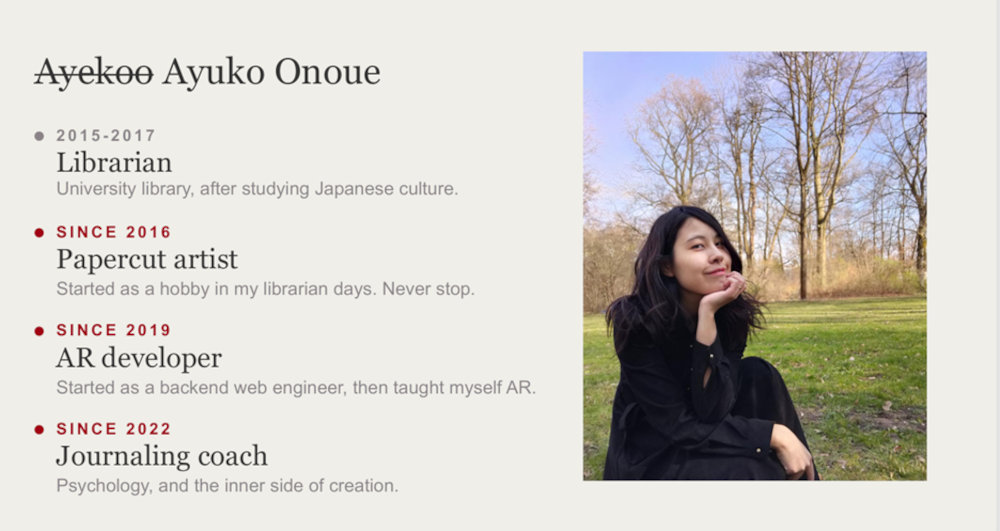
Figure 1: Profile of Ayuko Onoue. When I first heard her name, it sounded like 'Ayekoo,' which means "Well done" in my language, Akan. I later realised it was actually 'Ayuko,' not 'Ayekoo.'
Bridging Analogue Craft and WebAR Through the Sankofa Philosophy
Ebenezer Kow Abraham
Event: Transcultural Virtual Workshop & Lecture
Date: Tuesday, 21st July 2026
Host: Ebenezer Kow Abraham (Department of Art Education, University of Education, Winneba)
Guest Facilitator: Ayuko Onoue (WebAR Engineer, Traditional Kirie Papercut Artist & Journaling Coach, Munich)
Collaborators: UEW Department of Art Education, TUM-XR, and Exploring Visual Cultures
Introduction
As part of the Independent Studies in Drawing (ISD) curriculum in the Department of Art Education at the University of Education, Winneba (UEW), this international virtual workshop provided a practical exploration of decolonial studio practice, material sovereignty, and transnational collaboration.
The workshop brought together Return, Retrieve, Rise, the pedagogical framework developed by Ebenezer Kow Abraham, grounded in the Ghanaian philosophical concept of Sankofa for his ISD class, and contemporary digital technology (WebAR). Facilitated by Ayuko Onoue, a Munich-based Japanese artist and WebAR engineer, the session demonstrated how traditional handcraft (kirie papercut art) can coexist with and be elevated by augmented reality, offering students a powerful model for bridging analogue media, digital spaces, and transcultural dialogue.
Key Themes & Methodological Frameworks
1. Reinterpreting the 3Rs (Return, Retrieve, Rise) in Studio Practice
The workshop reframed Abraham’s Return, Retrieve, Rise pedagogical framework into an operational, three-stage creative methodology:
- Return (Unlearning Invisible Premises): Encouraging artists and students to recognise that their visual culture has been displaced by a foreign canon and to look back and unlearn absorbed Eurocentric or rigid artistic assumptions, such as the notion that drawing is strictly confined to pencil on white paper, or that digital technology must replace physical media.
- Retrieve (Reclaiming Material & Personal Sovereignty): Taking back local visual languages, cultural symbols (e.g., Adinkra, Kente, traditional motifs), and deeply personal creative motivations rather than seeking external validation.
- Rise (Synthesising New Knowledge): Utilising retrieved cultural and material assets to construct innovative visual practices, expanding the definitions of contemporary drawing, studio execution, and art education.
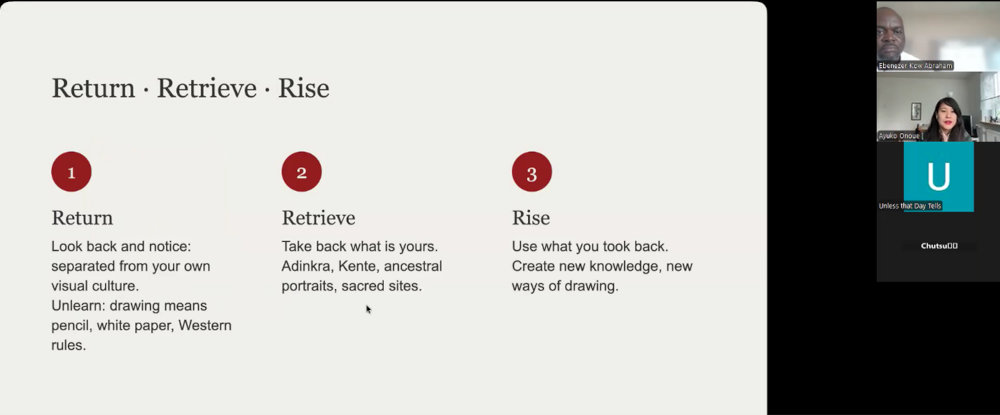
Figure 2: Screenshot of Ayuko Onoue’s Slide Presentation of her Understanding of the 3Rs Framework
Table 1: Application of the 3Rs Pedagogical Framework
|
RETURN, RETRIEVE, RISE (3Rs) |
||
|
Stage |
Pedagogical intent |
Studio Action |
|
Return |
Unlearn Eurocentric Canons |
Deconstruct |
|
Retrieve |
Reclaim Indigenous Knowledge System and agency |
Re-anchor |
|
Rise |
Synthesise hybrid mediums |
Layer and expand |
2. Love-Driven Development (LDD)
Ayuko Onoue introduced her iterative creative philosophy, Love-Driven Development (LDD), which complements the 3Rs framework by breaking down studio execution into a three-step cycle:
- Start Tiny: Begin with immediate, manageable physical actions without waiting for grand setups.
- Add One Question: Ask a single, targeted question to refine or elevate the work.
- Repeat: Allow the work to evolve organically into a richer, layered medium.
3. Analogue Integrity in Digital Spaces (Paper to Pixels)
A central takeaway of the session was the relationship between physical materials and digital overlays. Digital technology, specifically Augmented Reality (AR), was presented not as a replacement for physical craftsmanship, but as an additional spatial layer. The tactile authenticity of manual papercutting (kirie), defined by its physical resistance and absence of an "undo button," remains the foundational anchor, while WebAR acts as an immersive extension that breathes motion and narrative into physical space.
Workshop Activities
The session combined theory and practice through a structured sequence of activities.
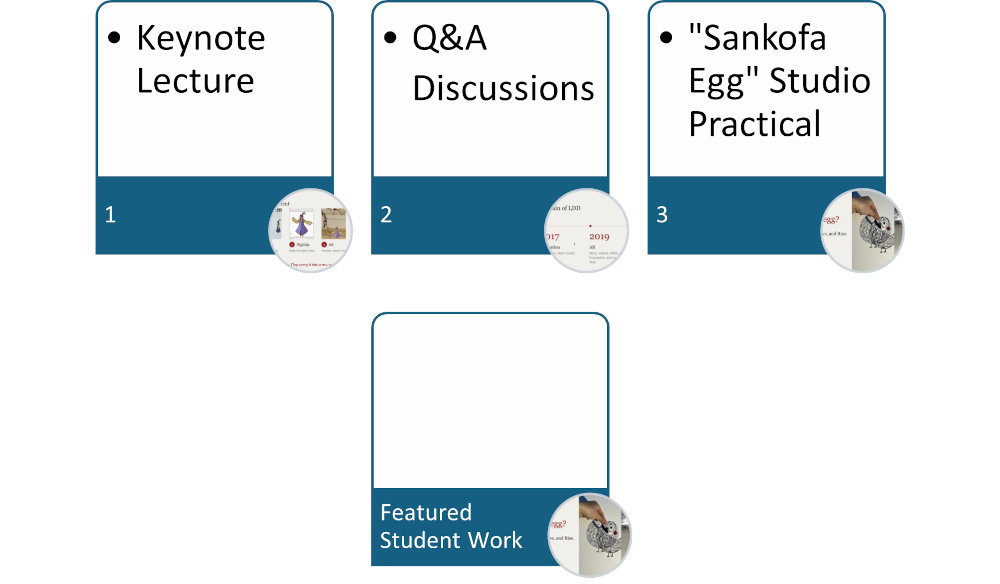
Figure 3: Structured Sequence of the Workshop
Keynote Presentation
During the opening lecture, Ayuko Onoue shared her creative journey, tracing her path from filling notebooks with stories as a child to becoming a university librarian, a self-taught web engineer, and a pioneering WebAR artist.
Participants learned how her interests in storytelling, animation, papercutting, and coding converged into a unique artistic practice that bridges the analogue and digital worlds. Her reflections offered students a powerful example of how creative identities are forged through experimentation, persistence, and interdisciplinary learning.
Interactive Discussion
The presentation was followed by an engaging question-and-answer session. Students explored topics such as:
- The digitisation of handmade artworks.
- WebAR production workflows.
- The preservation of material textures in digital environments.
- Strategies for navigating self-directed technological learning.
The discussion highlighted the importance of curiosity and adaptability in contemporary artistic practice.
Studio Exercise: Designing the Sankofa Egg
The practical component challenged students to create symbolic Sankofa Eggs from simple materials such as paper, colored pencils, and markers. Each participant reflected on personal aspirations, cultural memories, creative interests, and unrealised possibilities, translating these ideas into visual form within the framework of Return, Retrieve, Rise. Students then presented their work via live camera feeds and received immediate feedback on composition, symbolism, colour relationships, and possibilities for future digital augmentation.
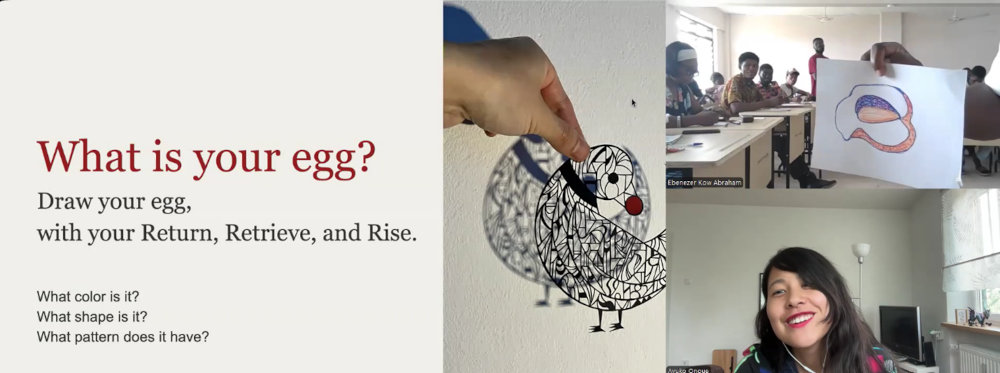
Figure 4: Student Ebenezer Adoma Shows his Sankofa Egg
Featured Student Work: Stanley Adoma
Among the most memorable outcomes of the workshop was a drawing created by student Stanley Adoma. Developed as part of the Sankofa Egg exercise, Stanley's artwork reflects on the cultural practice of body piercing and ring adornment—traditions that continue to resonate with his understanding of identity and self-expression.
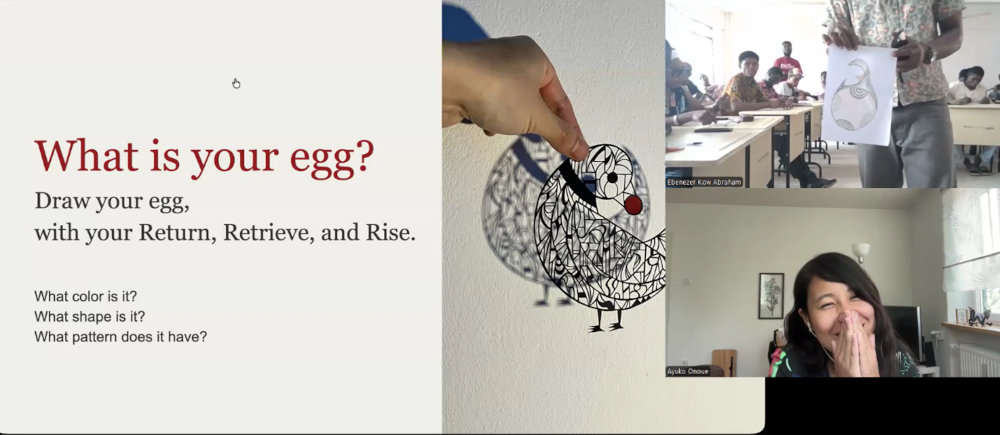
Figure 5: Student: Stanley Adoma Shows His Sankofa Egg
Through the Return, Retrieve, Rise framework, the work represents an act of retrieval, revisiting a cultural practice he values and believes should retain significance in contemporary society. Key structural features include:
- Form & Motifs: The design combines an egg-like form with circular ring motifs distributed across its surface, evoking adornment and continuity.
- Symbolic Direction: An upward-reaching extension emerging from the form suggests aspiration, growth, and transformation.
- Significance: In the context of the workshop, the piece symbolises Stanley's desire to preserve and reinterpret this cultural practice as part of his future creative journey.
The work exemplifies how students engaged with the workshop's central challenge: identifying meaningful cultural references from their own experiences and translating them into contemporary visual narratives. It also demonstrates the potential for such imagery to be further developed through digital layers and WebAR interactions, extending personal stories into broader public and intercultural spaces.
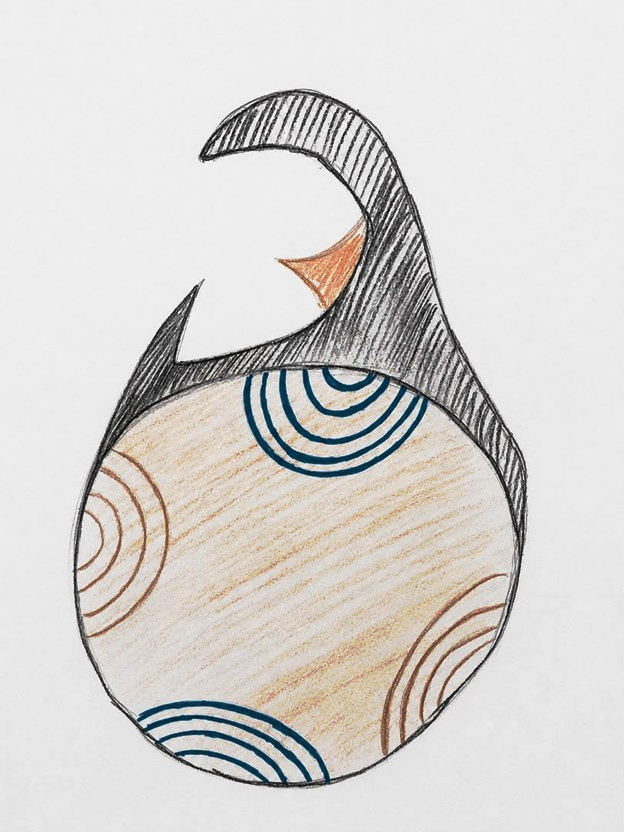
Figure 6: Stanley Adoma's Sankofa Egg
Reflective Curatorial Perspective
"The digital steps never replace the paper. They carry it into a new world." — Ayuko Onoue
This workshop reinforces our ongoing commitment at UEW and within the Exploring Visual Cultures network to dismantle the artificial dichotomy between traditional indigenous art practices and contemporary technological tools.
By applying the Return, Retrieve, Rise pedagogical framework, the session provided students with a concrete blueprint for sovereign visual synthesis, demonstrating that WebAR can honour and preserve the tactile beauty of analogue craftsmanship while projecting local narratives into interactive global spaces.